
Last updated November 16, 2026
 Sweep & inspection
 Caps & crowns
 Flue relining
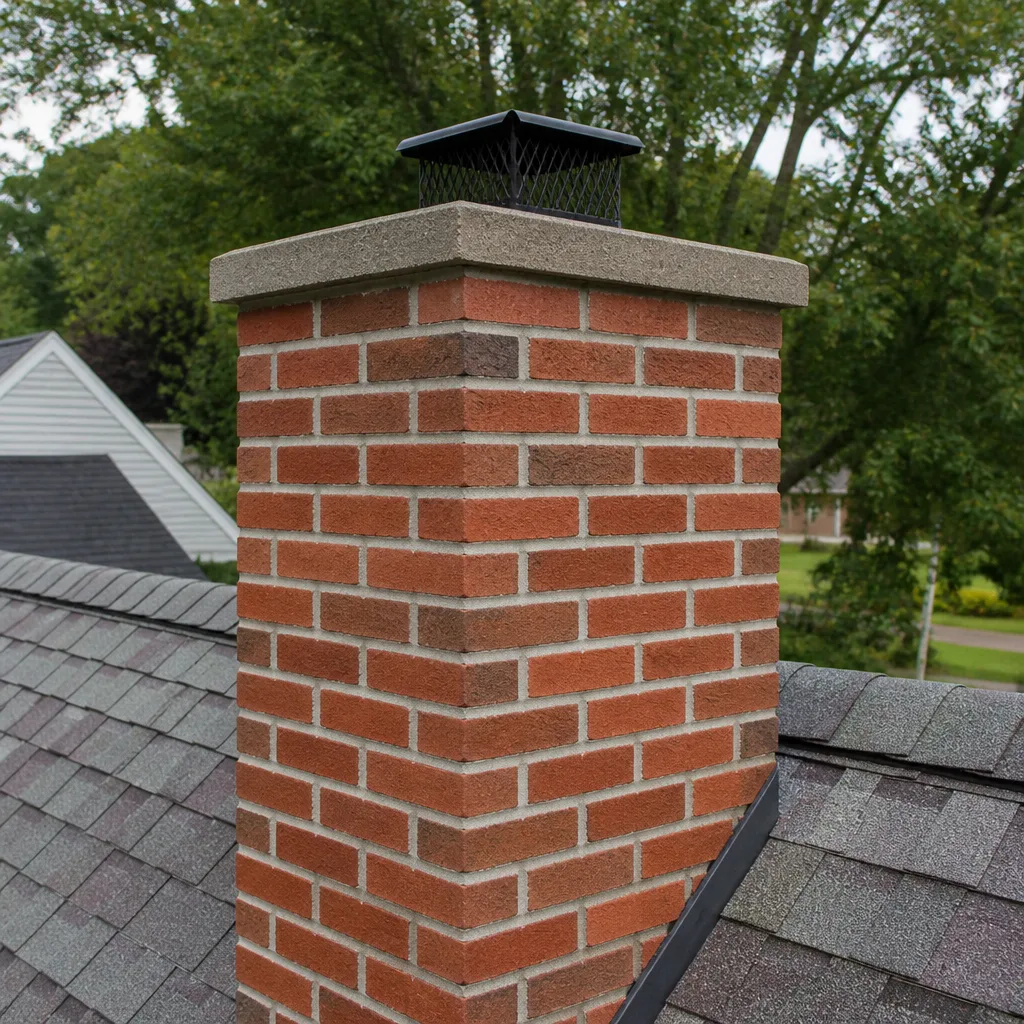 Masonry repair
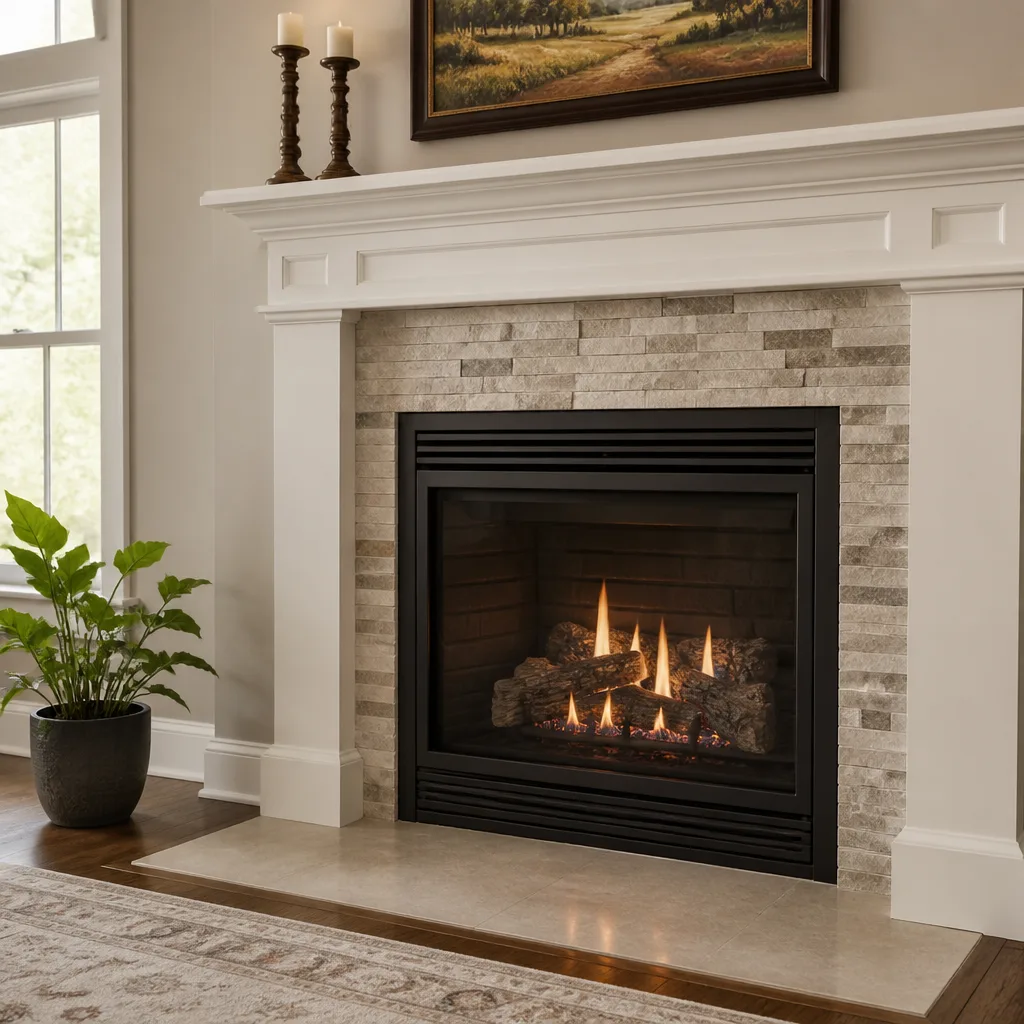 Gas fireplace service
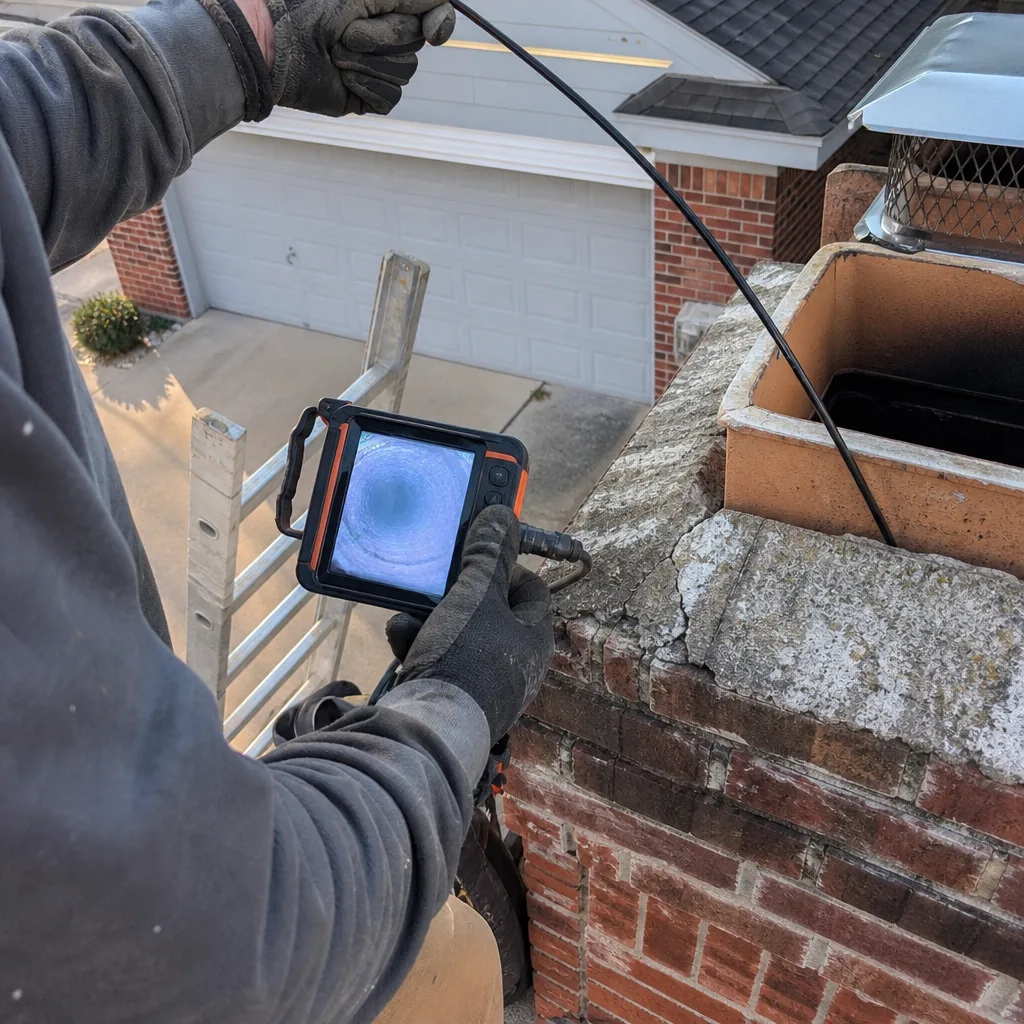
Level 1 sweep and inspection to the NFPA 211 annual standard - flue, crown, cap, and flashing checked and photographed
Chimney sweep logs do not sweep chimneys. They loosen some creosote - which then falls where a brush and vacuum still have to collect it.
DIY vs Professional Chimney Cleaning: The Tulsa Homeowner’s Decision Guide
You can buy the same chimney brush a professional uses. What you can’t buy is the ability to identify a Stage 2 creosote glaze or a hairline flue crack while you’re standing on a roof in October, and those are the two things that determine whether your fireplace is safe to light. That’s the honest starting point for this decision. Most chimney sweeping guides hand you a checklist and send you up a ladder. This one won’t. It’s going to walk through exactly what DIY sweeping can accomplish, what it can’t, the specific ways Tulsa’s housing stock raises the stakes, and the one scenario where doing it yourself genuinely makes sense. You’ll finish knowing which side of the line you’re on before you spend a dollar.
Quick Answer
DIY chimney sweeping works for one narrow situation: a straight, well-maintained flue in good condition that needs loose soot knocked down between professional inspections. It cannot replace professional inspection of liner joints, the smoke chamber, smoke shelf, or firebox integrity, and those are the parts that fail quietly. For most Tulsa homeowners with older masonry chimneys or clay-tile liners of unknown repair history, professional service is the safer and often cheaper path over a five-year window.
Styles & brands we work with
- Sweep & inspection
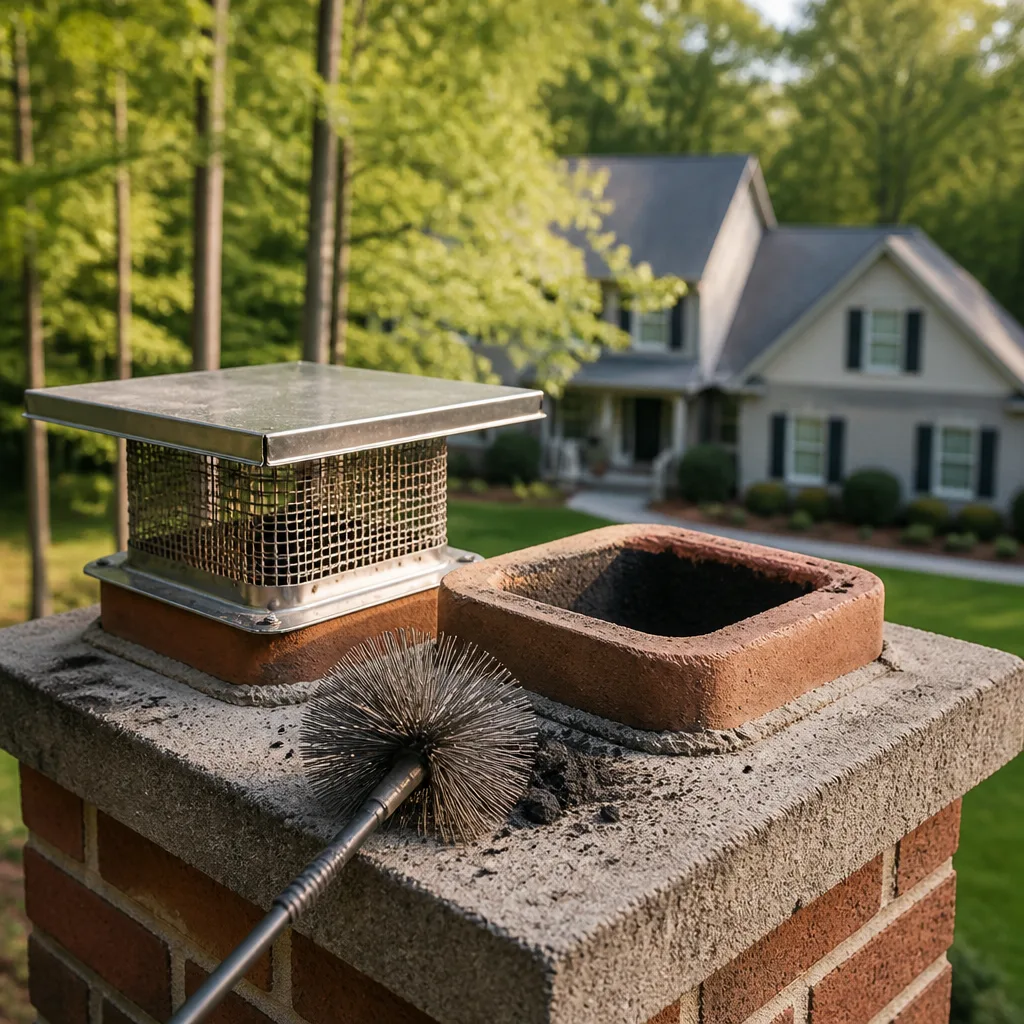
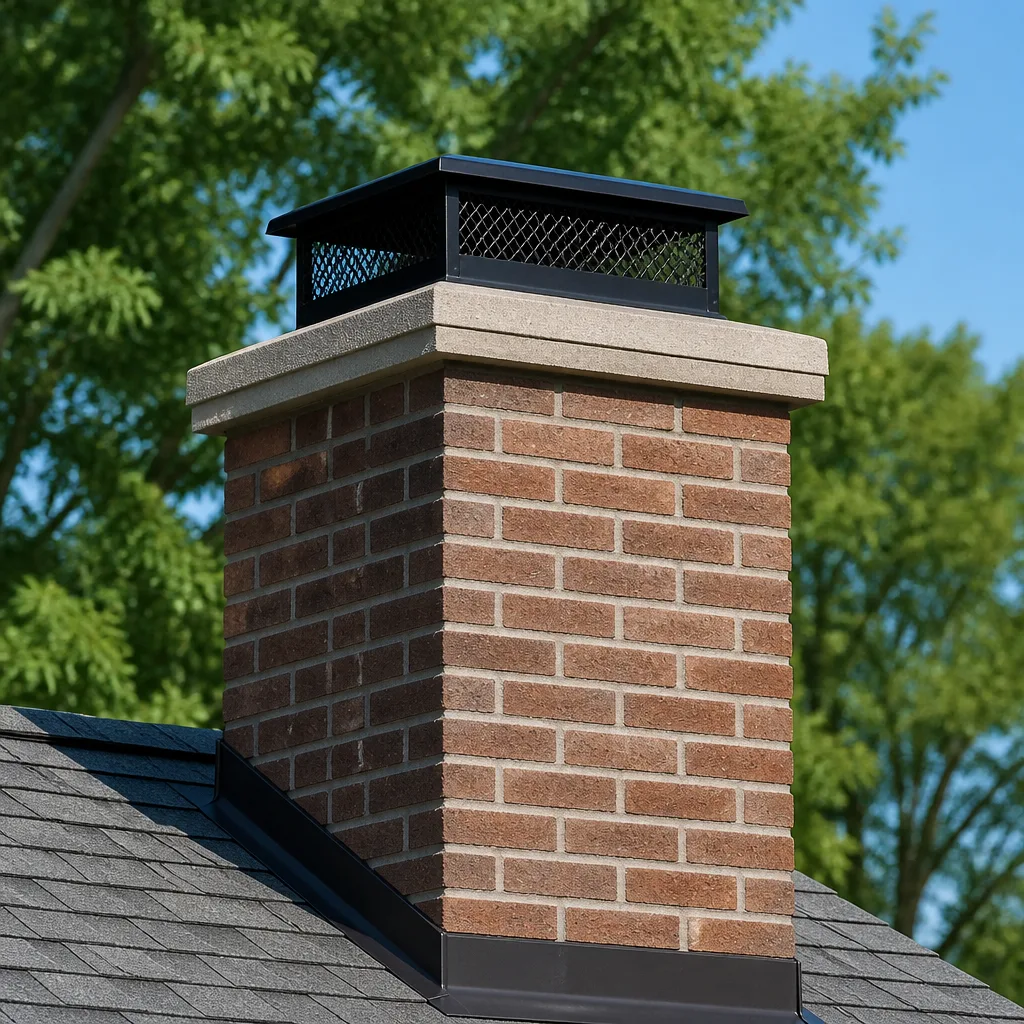
- Caps & crowns
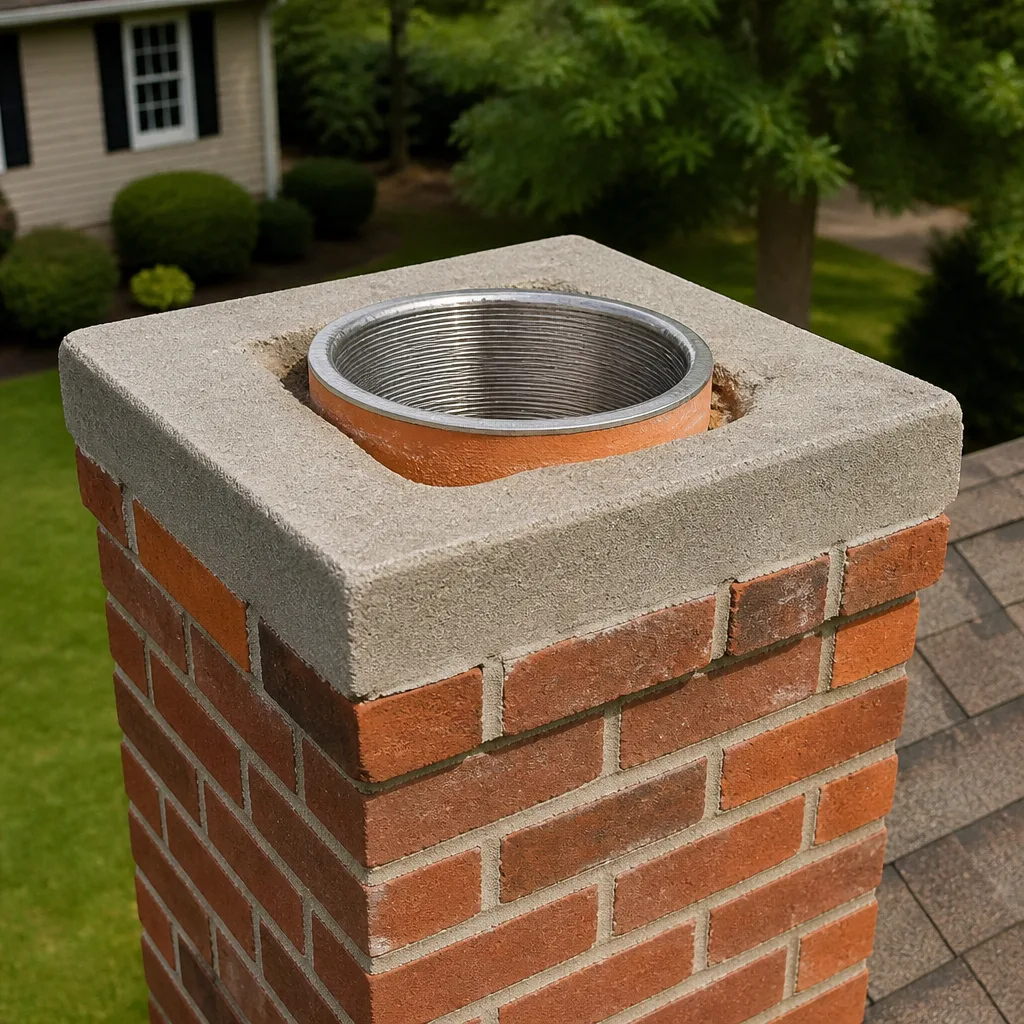
- Flue relining
- Masonry repair
- Gas fireplace service
Table of Contents
- What DIY Chimney Sweeping Actually Accomplishes
- What DIY Sweeping Cannot Accomplish (And Why It Matters)
- The Tulsa Factors That Make DIY Riskier Here
- The Real Cost Comparison Over Five Years
- The One Scenario Where DIY Is Genuinely Appropriate
- What a Professional Sweep Actually Involves
- Creosote, Stage 2 Glaze, and Why the Brush Isn’t the Hard Part
- When to Stop and Call Instead
What DIY Chimney Sweeping Actually Accomplishes
Start with a clear-eyed picture of what a homeowner with a brush kit can do. It’s not nothing. On a straight flue in good condition, a properly sized brush on a rodded pole will knock loose soot and light creosote off the firebox walls and the accessible upper sections of the flue. That’s real work, and it’s the same mechanical action a professional performs with a more complete set of tools.
Here’s what a competent DIY sweep involves:
- Sizing the brush to the flue. Too small and you miss the walls; too large and you jam the rod or crack a clay tile. This is the first place people get it wrong.
- Setting up containment. Drop cloths, sealing the firebox opening, and a shop vacuum rated for fine ash. Without containment you’ll be wiping soot off every surface in the room for a week.
- Working bottom-up or top-down. Bottom-up is safer (no ladder) but messier. Top-down requires roof access, which is where most DIY efforts actually end.
- Cleaning the firebox and smoke shelf. The shelf behind the damper collects soot and debris and clogs easily. A vacuum and a hand brush get most of it.
- Disposal. Soot and creosote are dirty and mildly corrosive. You’ll be bagging it, hauling it, and cleaning tools afterward, which takes longer than the sweep itself.
Notice what’s missing from this list. There’s no boroscope camera, no inspection of the flue interior from top to bottom, no assessment of the chimney crown or flashing, and no evaluation of the firebox masonry for cracks behind the firebrick. That’s the gap, and it’s a wide one.
What DIY Sweeping Cannot Accomplish (And Why It Matters)
A brush cleans surfaces it can reach. It does not tell you anything about the integrity of the system that contains the fire. This is the single most important distinction in this guide, and it’s the reason professional inspection exists as a separate service from sweeping in the first place.
Here’s what a homeowner sweeping their own chimney cannot reliably check:
- Liner joints. Clay tile liners are stacked in sections with mortar joints. Those joints shift, crack, and separate, especially in older housing stock. A gap in a liner joint is a direct path for hot gas and carbon monoxide into the framing of the house. You cannot see this from the firebox with a flashlight, and you can’t feel it with a brush.
- The smoke chamber and smoke shelf. The smoke chamber is the sloped area above the damper that funnels smoke into the flue. It’s rough, angled, and hidden. Creosote accumulates on its walls and glaze forms there more readily than in the straight flue. Most sweeping tools don’t reach the full surface area.
- Firebox integrity. Cracks in the firebrick, deteriorating mortar joints between bricks, and gaps where the firebox meets the face brick are structural and fire-safety issues. They aren’t visible during a sweep and they don’t get addressed by one.
- Flue sizing and draft. A flue that’s the wrong size for the appliance, or that has a draft problem, will burn poorly and glaze faster. Identifying this takes measurement and experience with how different appliances behave in different chimneys.
- Chimney crown and flashing. The crown keeps water out of the top of the chimney; the flashing keeps it out of the roof. Both fail silently and both cause expensive damage. Neither is inspected during a DIY sweep.
- Exterior condition. Spalling brick, deteriorated mortar, and leaning stacks are visible from the ground only to someone trained to look for them, and from the roof not at all if you’re sweeping bottom-up.
This is why professional chimney inspection is one of the three core services any real chimney specialist offers, and why we specify professional-grade restoration systems like HeatShield when liner resurfacing is the right call. You can’t specify a solution for a problem you can’t see.
The Tulsa Factors That Make DIY Riskier Here
Tulsa’s housing stock matters in this decision. The city has a substantial amount of mid-century and older masonry construction, and many of those chimneys were built with clay tile liners that were never designed to be inspected by anyone other than a chimney professional. Some have been relined at some point. Some haven’t. Some have a repair history that’s lost to time because the work was done by a previous owner and never documented.
That uncertainty is the crux of it. When you buy an older home in Tulsa, you inherit a chimney with an unknown service history. The clay tile might be in perfect shape. It might have a joint that’s been separating since the 1980s and nobody noticed because nobody looked. A chimney sweep with a camera looks. A homeowner with a brush doesn’t.
The other Tulsa factor is climate. Our summers are hot and humid, and our winters swing hard enough to produce freeze-thaw cycling on exterior masonry. That cycling is what opens small cracks in the chimney crown and mortar over time, and those cracks are what let water into the structure of the chimney. Water intrusion accelerates spalling, rusts dampers and fireboxes, and eventually compromises the liner. None of this is caught by sweeping, and all of it is caught by a proper inspection.
We also see a lot of homes in the Tulsa area where previous owners installed a wood-burning insert or stove into a fireplace that was originally built for an open fire. The flue sizing, the connector, and the liner requirements all change with that conversion, and they aren’t always done correctly. Getting that right takes a professional eye. If you’re not sure what’s actually sitting in your fireplace opening, it’s worth having Tulsa Chimney Cleaning look before you run a brush through it.
The Real Cost Comparison Over Five Years
DIY looks cheap on the front end and gets less cheap the longer you look at it. Here’s an honest accounting of what each path actually costs over a five-year window. Prices are typical estimates for the Tulsa area, and the written estimate is what sets the final price for any professional work.
| Item | DIY (per year) | Professional (per year) |
|---|---|---|
| Equipment: brush, rods, drop cloths, vacuum, ladder or roof access | $80 – $250 one-time, plus replacement | Included in service |
| Annual service | $0 beyond your time | $150 – $350 typical for a standard sweep and inspection |
| Time investment (setup, sweep, cleanup, disposal) | 3 – 5 hours | About 1 – 2 hours, done for you |
| Disposal and cleanup | Soot bags, tool cleaning, room cleanup | Included |
| Inspection of liner, smoke chamber, firebox, crown | Not performed | Included with a professional sweep |
| Camera inspection and photo report | Not performed | Included |
| Five-year service cost (excluding major repairs) | Roughly $300 in equipment and replacement, plus 15 – 25 hours of your time | Roughly $750 – $1,750 across five professional visits |
Read that table honestly. Professional service costs more in dollars. DIY costs more in time, and it leaves the entire inspection side unaddressed. The real question isn’t which is cheaper in a single year. It’s whether skipping inspection for five years could cost you a liner replacement, a firebox rebuild, or worse. A separated liner joint that gets caught and resurfaced with HeatShield runs far less than a full reline with DuraFlex or Olympia Chimney, and a full reline is what you’re looking at when a liner goes from repairable to replacement. The cheapest five-year window is the one where the small problems get caught and addressed, and that’s the professional path.
There’s also a materials reality to contend with. Hardware-store brushes and rods are frequently sized for the consumer market rather than for the actual flue in front of you. Our technicians have up to 10 years of experience working with proper chimney-specific tooling and with professional-grade components from brands like Gelco, Famco, Copperfield, and Olympia Chimney, and that tooling is part of why the cheap path often stops being cheap.
The One Scenario Where DIY Is Genuinely Appropriate
There is a real scenario where a homeowner should absolutely run the brush themselves between professional visits. It’s just narrower than the internet makes it sound.
Here’s the scenario that works:
- You’ve had a professional sweep and inspection within the last year. You know what the liner, smoke chamber, firebox, and crown look like. Nothing is flagged for repair.
- You have a straight flue and a well-maintained insert or stove that burns dry, well-seasoned wood. Smoldering, unseasoned, or trash fires produce far more creosote and put you in a category where DIY brushing between visits is a bad idea.
- You need to knock down loose soot mid-season and the buildup is light. This is a mechanical touch-up, not a full service.
- You have safe roof access or a proper bottom-up setup with containment and a rated vacuum, and you can size the brush correctly to the flue.
- You still get a professional sweep and inspection once a year. The DIY touch-up is additive. It is not a replacement.
That last point is the whole ballgame. DIY maintenance is appropriate as an addition to professional service, for a well-understood system, between annual inspections. It is not a substitute for the inspection, and it is never the right call for a system you don’t fully understand. If you can’t describe the condition of your liner joints and smoke chamber, you’re not in this scenario yet.
What a Professional Sweep Actually Involves
Wondering what you’d be getting for the price difference? Here’s what a typical professional visit covers in a Tulsa home.
- Before-work inspection. We check the firebox, damper, smoke shelf, and visible flue, then confirm the flue type and any appliance connections before any tooling goes in.
- Containment. Drop cloths, sealed firebox opening, and a HEPA-rated vacuum so no soot escapes into your living space.
- Mechanical sweeping. The right-sized brush and rods for your flue, worked through the accessible length, with the smoke chamber and shelf cleaned as a separate step.
- Camera inspection. A boroscope run through the full flue, with a written record of what we see. The photo report is part of the service, not an add-on.
- Creosote assessment. Stage 1 buildup gets swept. Stage 2 glaze gets addressed. Stage 3 is a professional-only problem that calls for a different approach entirely.
- Crown and flashing review. Visible from the exterior, this is where water comes in and where small issues become large ones.
- Report and recommendation. You get a plain summary of what we found, what’s fine, and what (if anything) needs doing. Nothing gets recommended without photo evidence you can see for yourself.
If a repair is needed, we specify the right system for the problem. Gelco and Famco components for caps and flashing. HeatShield for resurfacing a damaged liner without full replacement. DuraFlex and Olympia Chimney liner systems when a full reline is the correct call. These are the same brands the trade uses, and the reason we source from them is that a chimney repair is only as good as the materials in it. You can read more about the full scope on our chimney sweep page, or on the chimney repair page for the structural side of the work.
Creosote, Stage 2 Glaze, and Why the Brush Isn’t the Hard Part
Creosote is the byproduct of incomplete combustion, and it comes in three recognizable forms. Stage 1 is the soft, flaky soot most homeowners picture when they think of a dirty chimney. A brush removes it well. Stage 2 is a hardened, shiny glaze that has bonded to the flue surface, and a brush will bounce off it or merely scratch the surface. Stage 3 is a puffy, concentrated form that’s structurally dangerous and calls for professional removal with specific methods.
Here’s the point that gets lost in DIY guides: a brush seems to be doing its job even when it isn’t. Soot comes down the flue, the firebox gets swept, and everything looks clean from the bottom. Meanwhile, a glaze layer on the upper flue and the smoke chamber is still there, still accumulating, and still a fire hazard. Identifying which stage you’re dealing with is part of the professional service, and it’s also why you don’t want to bring a hardware-store brush to a Stage 2 problem and think you’ve solved it.
We’ve seen plenty of homeowners in the Tulsa area who were diligent about brushing every year and discovered on their first professional inspection that glaze had been building in the upper flue for years. The brush wasn’t the problem. The missing inspection was.
When to Stop and Call Instead
If you’re midway into a DIY sweep and any of the following comes up, put the tools down and call us. None of these are things to “work around.”
- You see or feel a glaze on the flue walls while running the brush. That’s Stage 2 or worse, and it needs professional removal.
- You can see gaps, cracks, or shifted tiles in the flue. A clay tile liner in this condition is not safe to use until it’s evaluated and repaired.
- There’s rust or corrosion inside the firebox or on the damper. This usually means water has been getting in for a while, which usually means the crown or flashing has failed.
- You smell smoke in the house when the fireplace isn’t burning, or you have a draft that’s gotten worse. This is a smoke chamber, flue sizing, or pressure issue, and it can’t be diagnosed from the firebox.
- The firebox masonry has visible cracks in the firebrick or mortar joints. Nobody should be running a fire in a firebox with compromised masonry.
- The chimney is on an older home with no service records and you don’t know what’s in the liner. Get an inspection first. Then decide about sweeping.
We want to be direct with you: chimney sweeping, chimney repair, and chimney inspection are the trade we work in, and it’s a job for a trained technician. A brush on a rod is not a dangerous tool. A roof is. A compromised liner is. The two big safety issues here, chimney fire and carbon monoxide, both come from conditions you cannot see without a camera, and neither one is worth gambling on.
Common Mistakes to Avoid
- Sweeping without inspecting first. If you don’t know the condition of your liner and smoke chamber, the sweep is being done blind. That’s backwards. Inspection comes first, sweeping second.
- Buying a hardware-store brush and calling it done. The brushes sold to homeowners are frequently undersized or oversized for the actual flue. A brush that doesn’t contact the walls doesn’t clean them, and a brush that’s too large can damage clay tile joints.
- Skipping the smoke chamber and shelf. Most of the creosote in a chimney accumulates in the smoke chamber, not the straight run. A brush passed through the flue misses it entirely.
- Ignoring the chimney crown and flashing. In Tulsa’s freeze-thaw climate, a cracked crown is how water gets into your chimney and starts causing damage that costs ten times what a crown repair does.
- Assuming a well-running fireplace means a healthy chimney. Plenty of chimneys that draft beautifully are also carrying a Stage 2 glaze and a hairline crack. Performance is not a health check.
- Climbing the roof without the right harness, ladder, and conditions. Roof access is where DIY chimney work causes the most injuries. Not the sweeping. The getting there.
- Doing a DIY sweep and skipping the annual professional visit entirely. The annual inspection is the whole point. If you trade professional service for DIY sweeping, you’ve traded safety for a savings you’ll pay back somewhere else.
See the difference
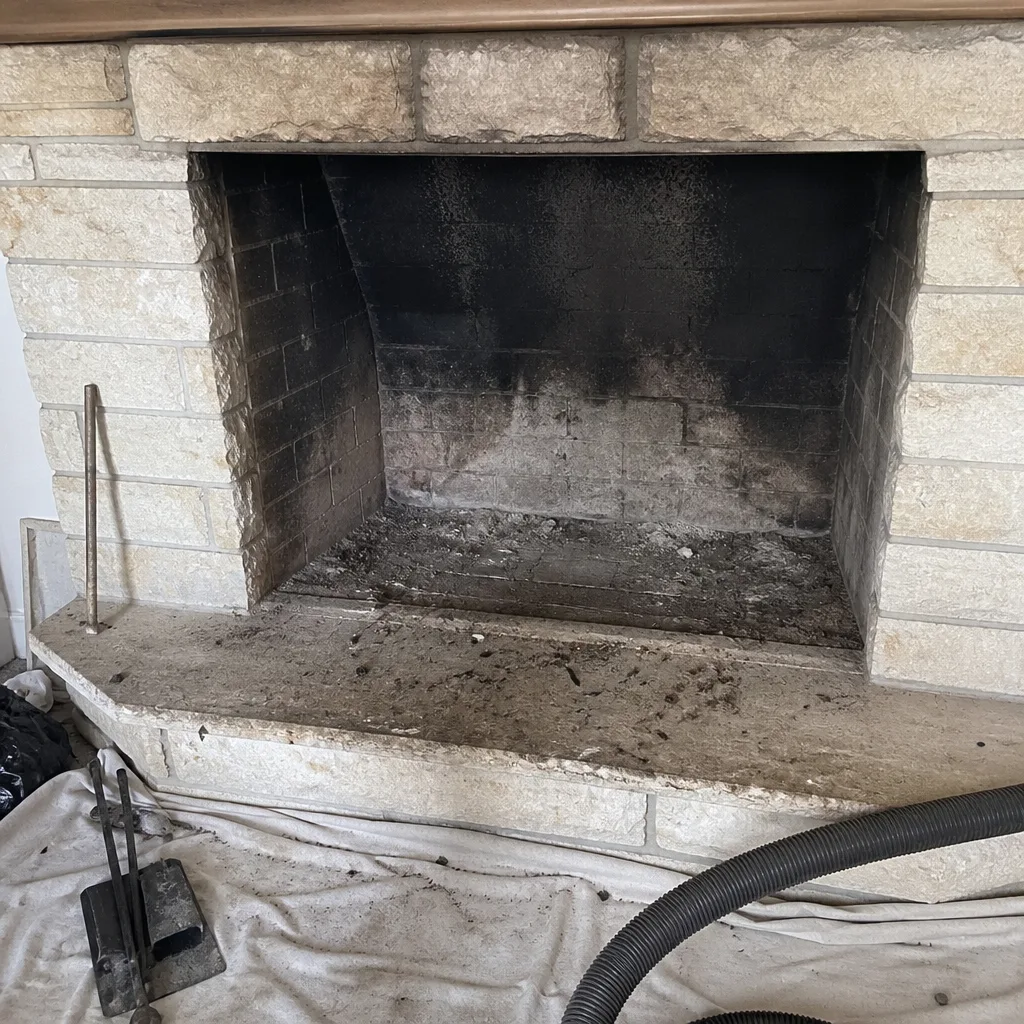 Before
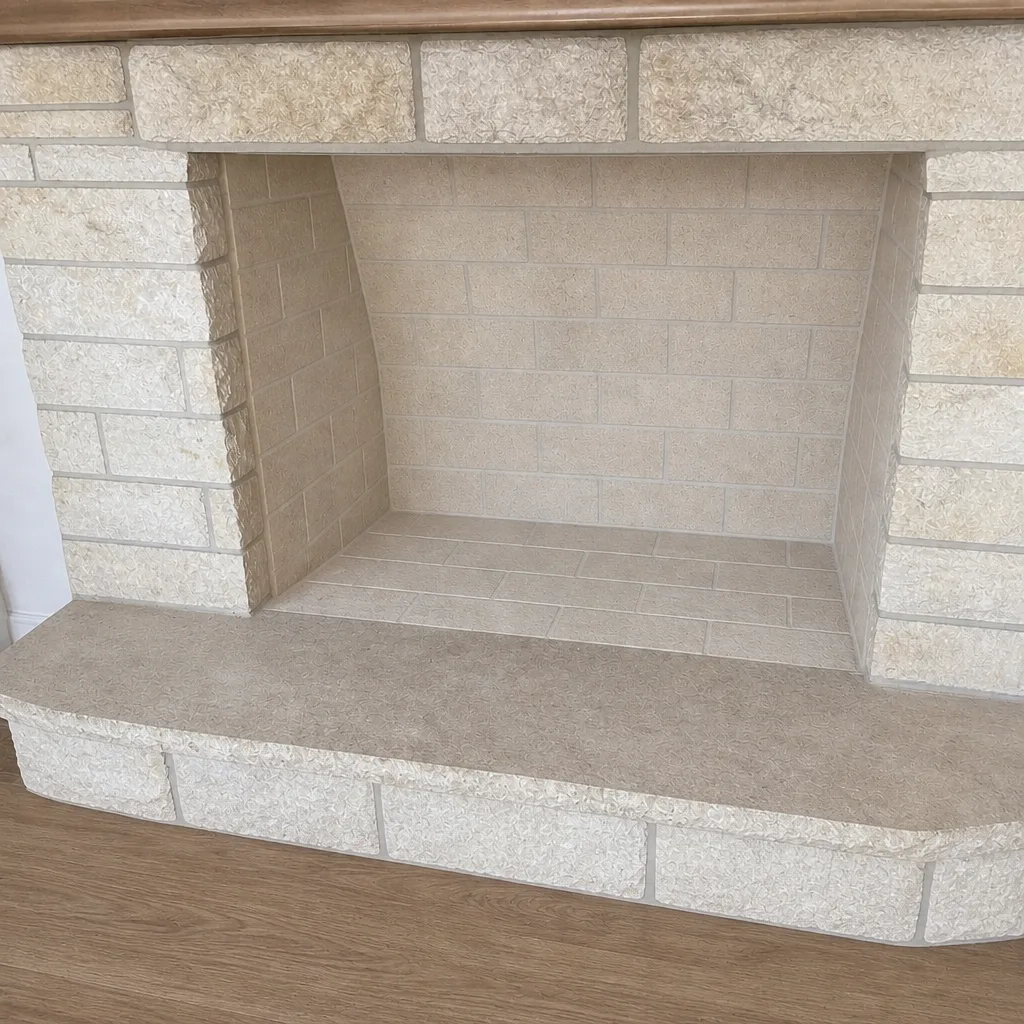 After
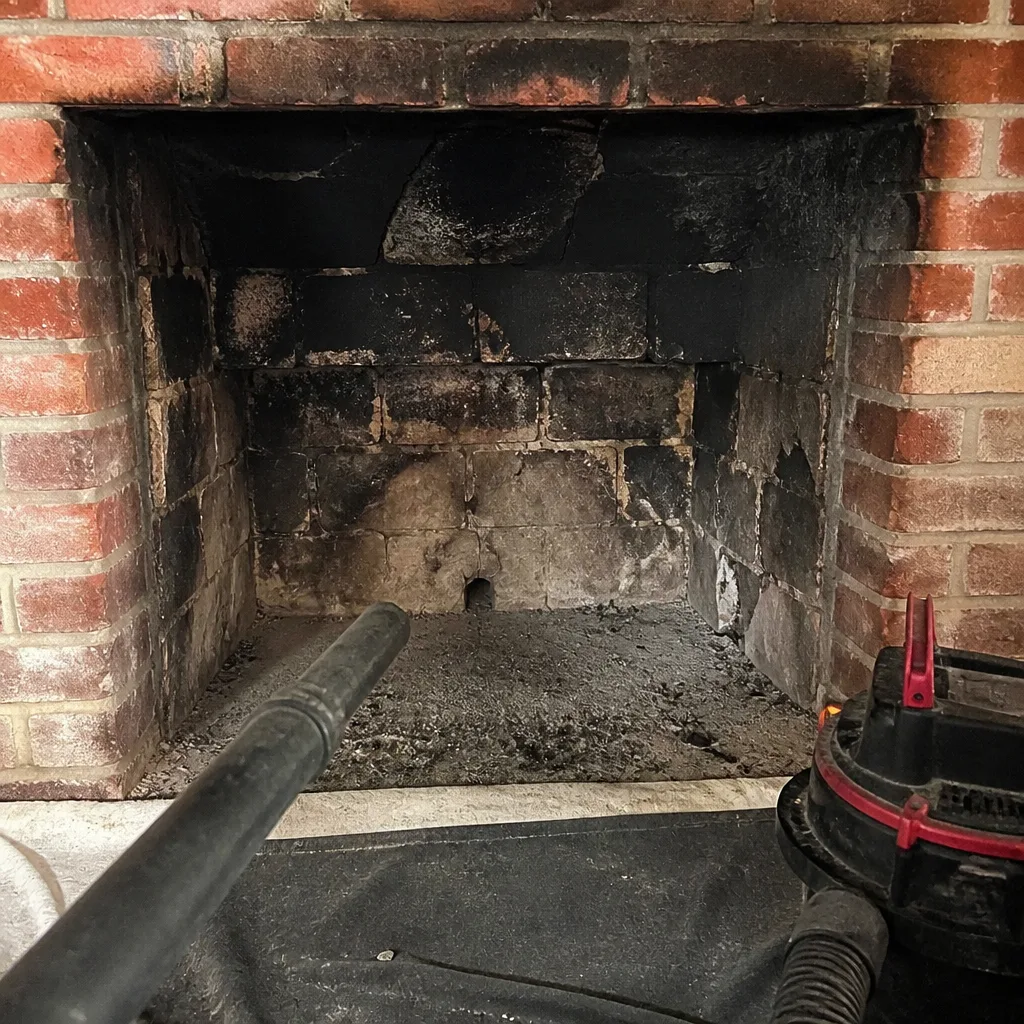 Before
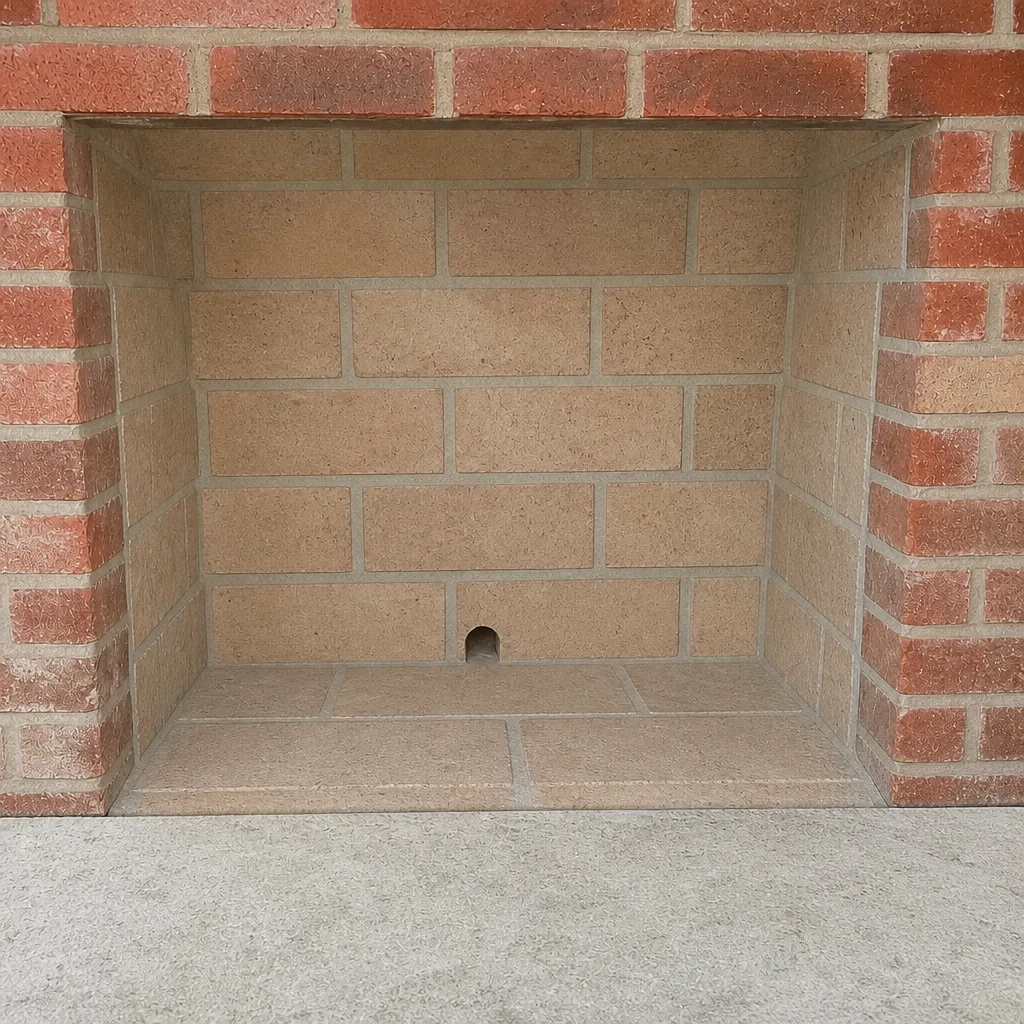 After
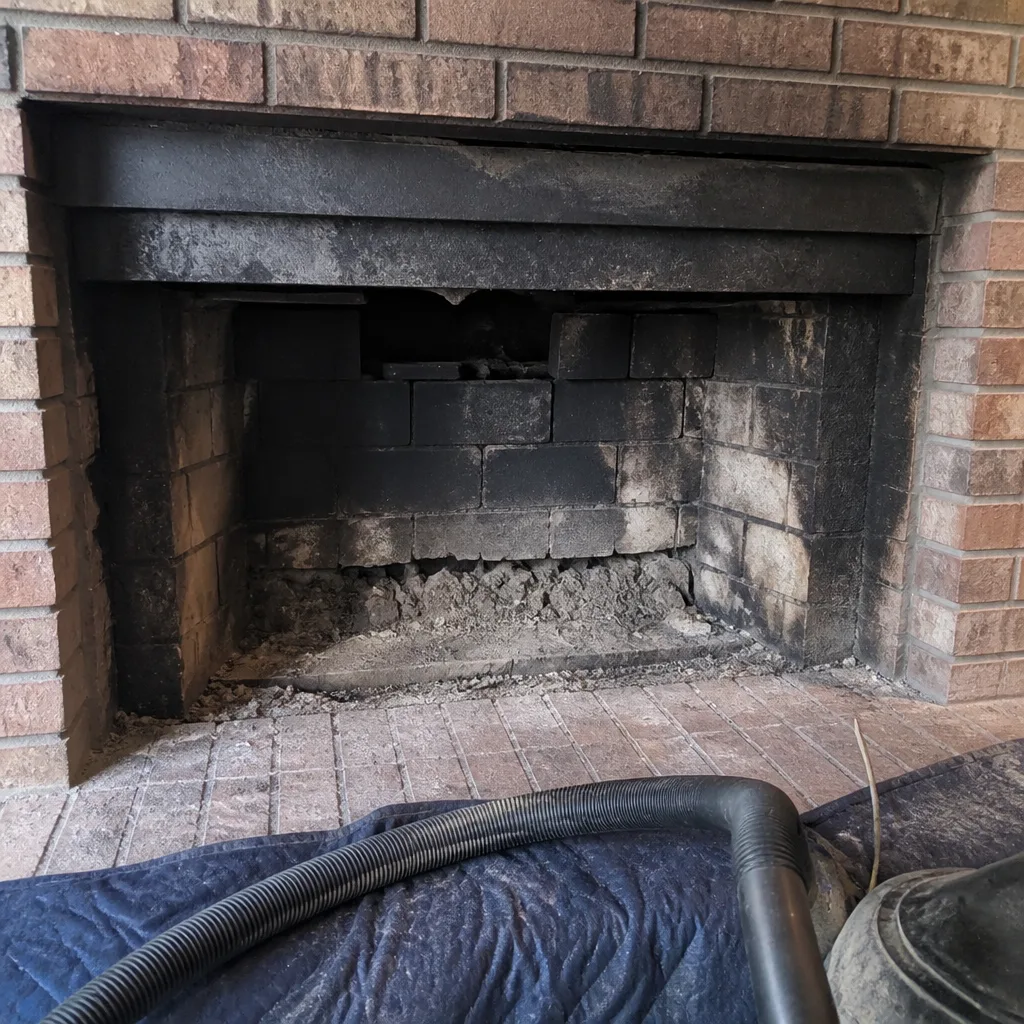 Before
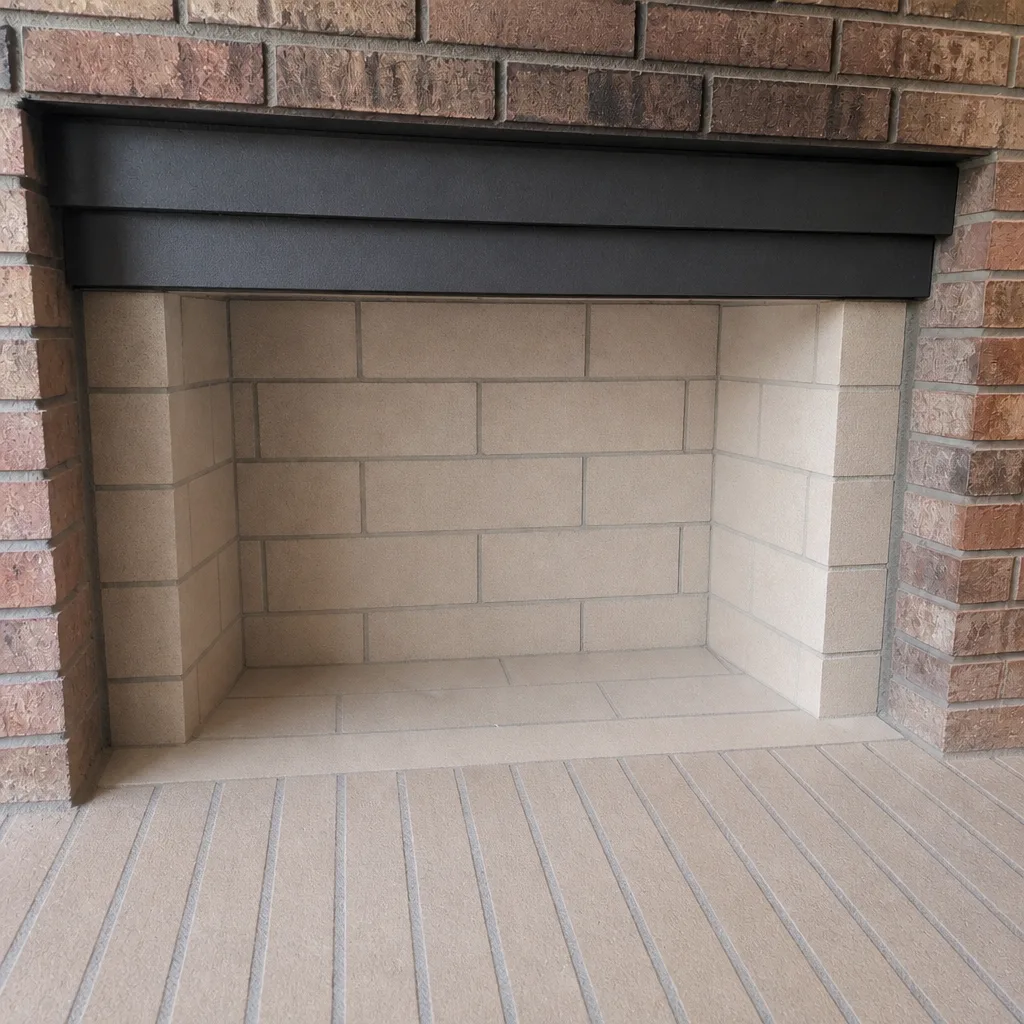 After
When to Call a Professional
Call a professional when any of the following is true: you don’t have a recent inspection on record, you see or suspect a Stage 2 glaze, you have a firebox or liner condition that’s unclear, your chimney is on an older home with unknown repair history, your cap or crown is damaged, or you simply want the annual service done right and don’t want to climb onto a roof in October. These are all situations where a trained technician with a camera and the right tooling will see things you won’t. Our technicians have up to 10 years of experience in exactly this work, and the inspection is included with the sweep, not billed separately. Tulsa Chimney Cleaning offers free estimates in Tulsa. Call (833) 712-5506. We answer 24/7, with fast dispatch from 7am to 7pm, Sunday through Friday.
Frequently Asked Questions
Typical estimates for a standard chimney sweep with inspection in the Tulsa area run $150 to $350, depending on the flue, the appliance, and the level of creosote. The written estimate sets the final price, and the estimate itself is free. Call (833) 712-5506 for an exact quote.
You can safely knock down loose soot from an accessible straight flue in a system you know is in good condition, using a properly sized brush and containment. You cannot safely substitute DIY sweeping for professional inspection, because the inspection covers liner joints, the smoke chamber, and firebox integrity that a brush does not address. If you’re unsure of your liner condition, call us before you sweep.
Creosote accumulates in the flue and smoke chamber with each fire, and small liner or crown issues get worse with every freeze-thaw cycle. The risk isn’t a chimney that fails gracefully; it’s a chimney fire or carbon monoxide intrusion from a condition you never saw. A professional sweep and inspection is how those conditions get caught early, when they’re cheap to fix.
Most homes with a wood-burning fireplace, insert, or stove should be swept and inspected once a year, and it’s worth having it done before the first fire of the season. If you burn heavily, burn unseasoned wood, or have an older masonry chimney, annual service is the floor, not the ceiling. Call (833) 712-5506 to book a sweep and we’ll tell you what we see.
You need a new liner when there’s physical evidence a liner repair won’t hold: separated tiles, a breach, or a deteriorated flue that resurfacing like HeatShield can’t restore. Nothing gets recommended without camera photo evidence you can see for yourself, and we’ll tell you plainly when a repair can safely wait. That’s the whole point of the inspection report.
A chimney sweep cleans the accessible surfaces, removing soot and light creosote. A chimney inspection evaluates the condition of the entire system, including liner joints, smoke chamber, firebox integrity, crown, and flashing, usually with a camera and a photo report. They’re separate services, and any real chimney specialist offers both. Ours are on the same visit. For the beginner’s version of the sweep side, see our chimney sweep explanation.
The Bottom Line
DIY chimney sweeping is real, useful work for a narrow set of circumstances: a straight flue in known-good condition, light soot between professional visits, and a homeowner with safe roof access and proper tooling. It is not a substitute for annual professional inspection, and in Tulsa’s older housing stock with unknown repair histories, that inspection is the part that actually keeps you safe. The cost comparison over five years favors professional service once you account for the liner and masonry problems that get caught early and cheap rather than late and expensive. Know what a brush can and can’t do. Let a professional see the rest. Sweep. Repair. Inspect. All from one specialist.
Call (833) 712-5506 for a free estimate. We answer 24/7. Fast dispatch from 7am to 7pm, Sunday through Friday.
Written by the team at Tulsa Chimney Cleaning.