
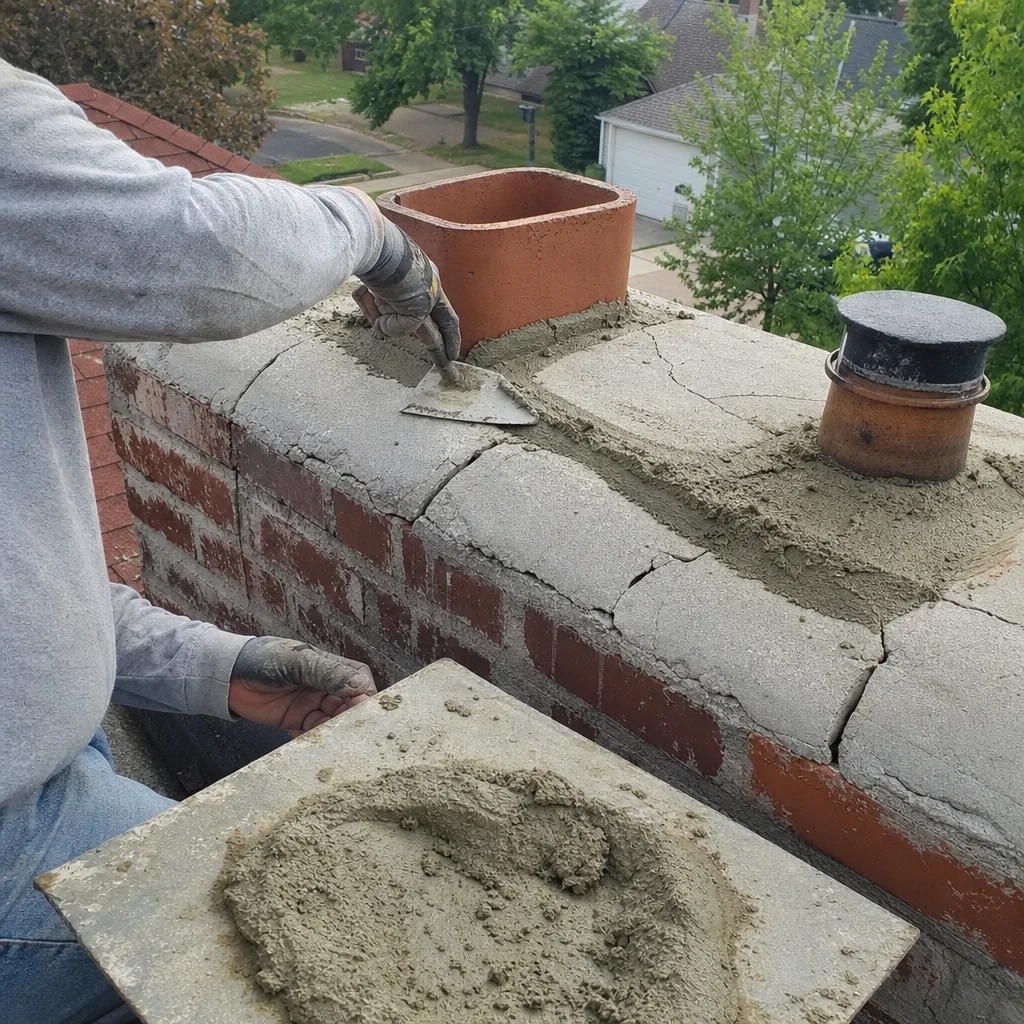
Last updated November 16, 2026
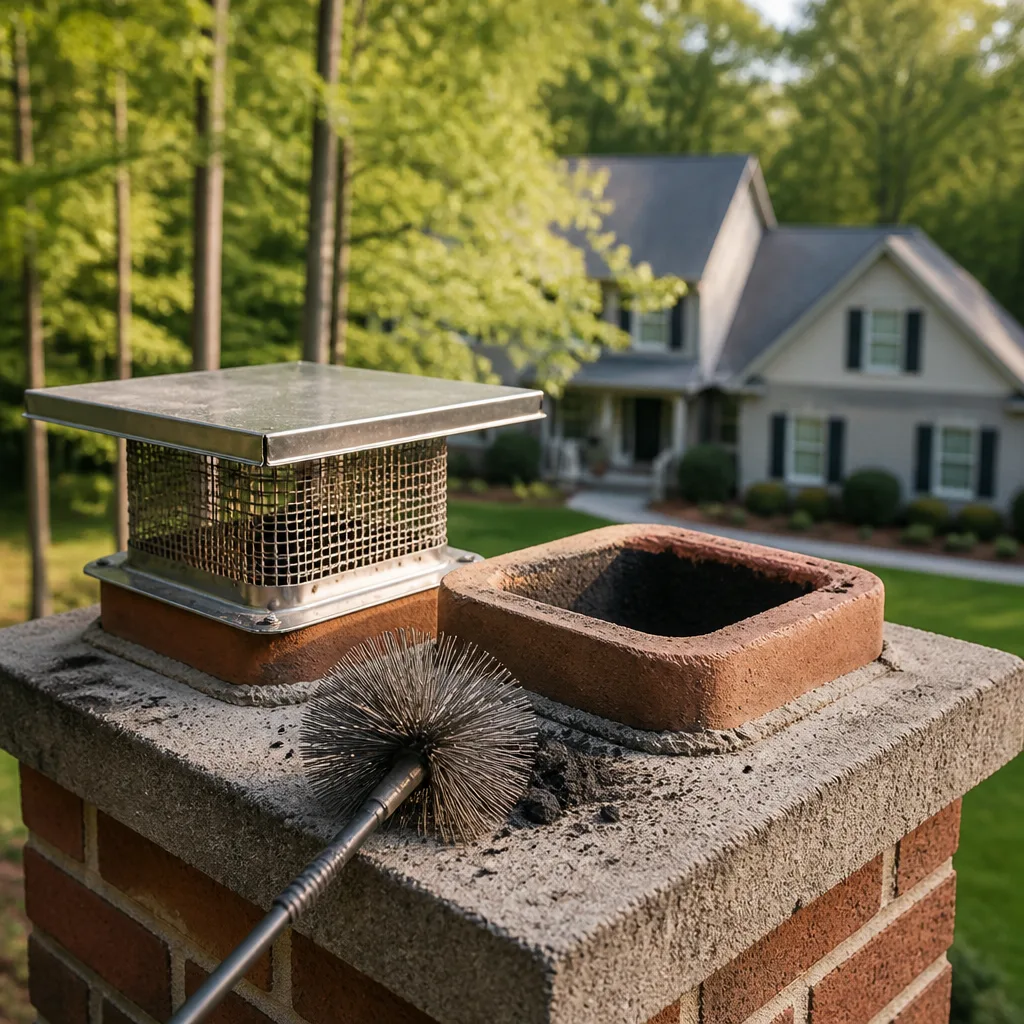 Sweep & inspection
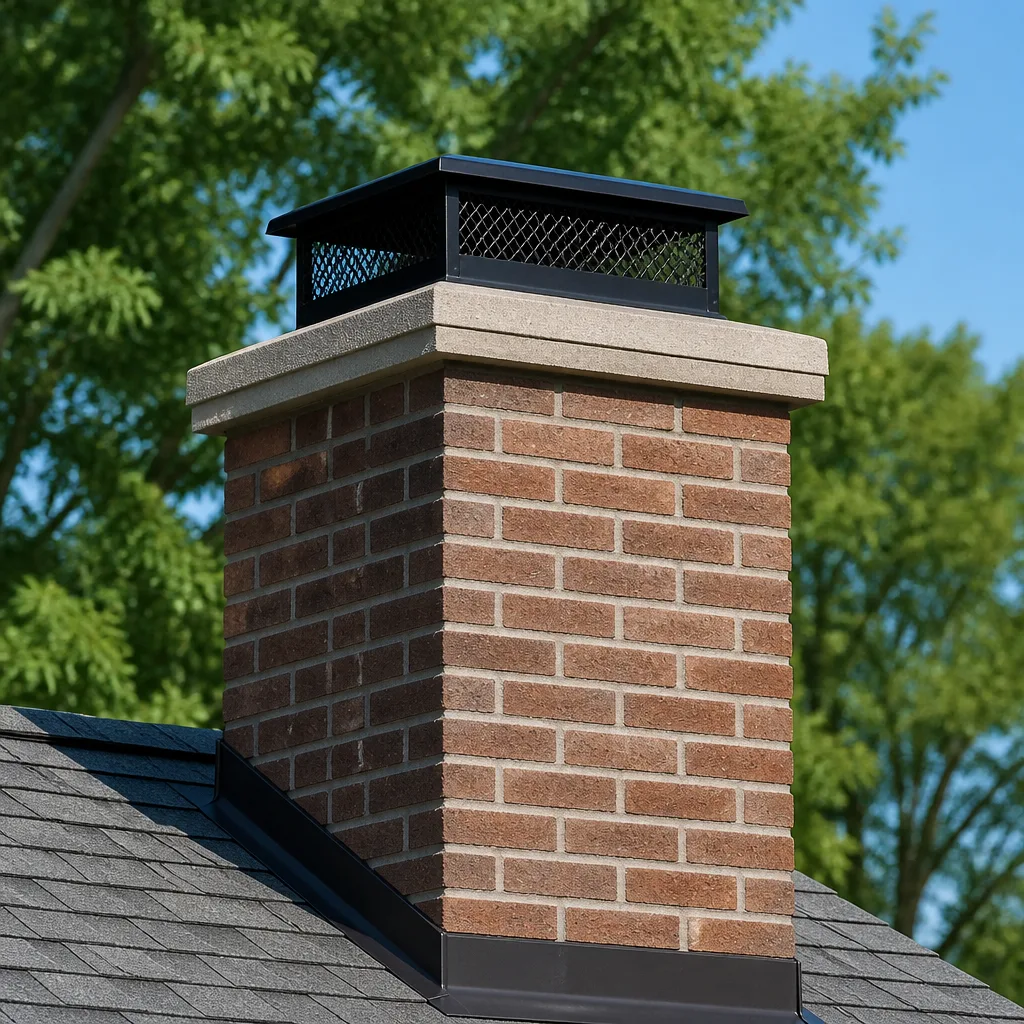 Caps & crowns
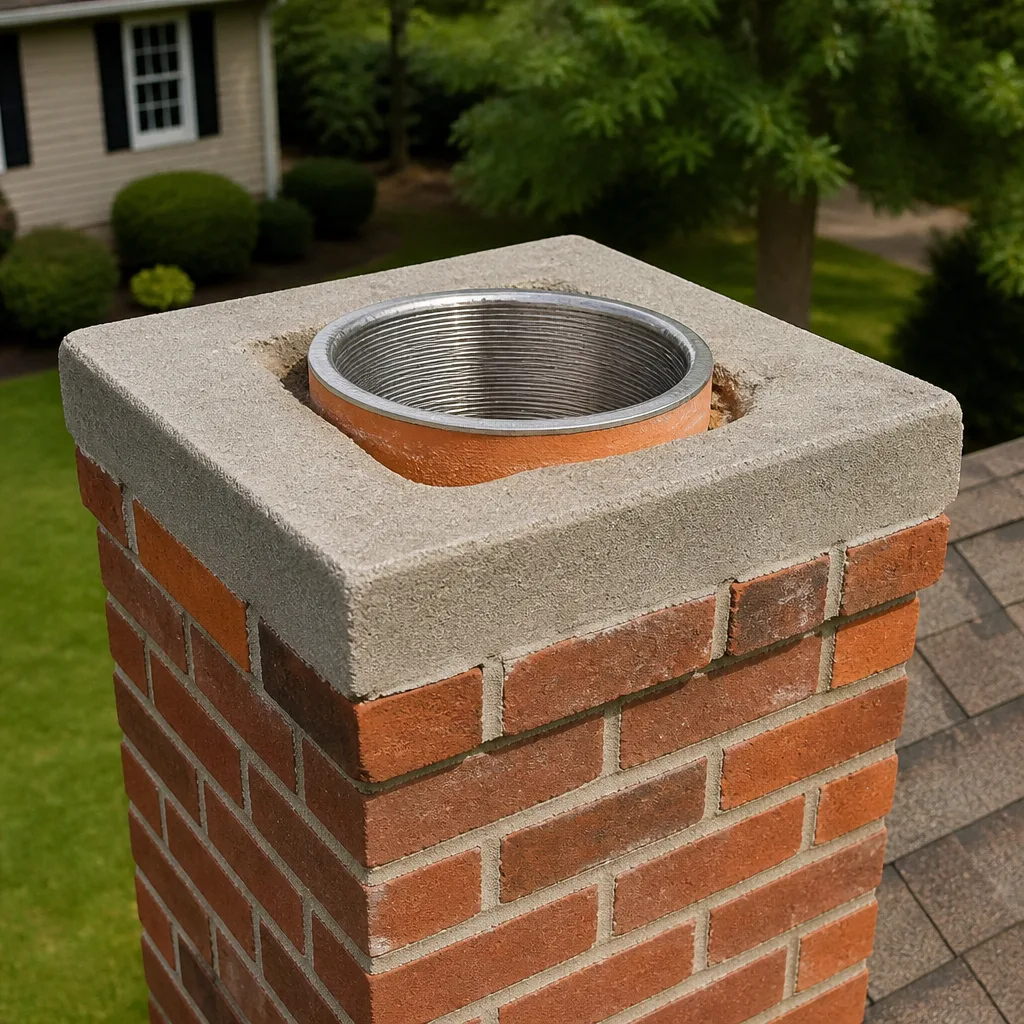 Flue relining
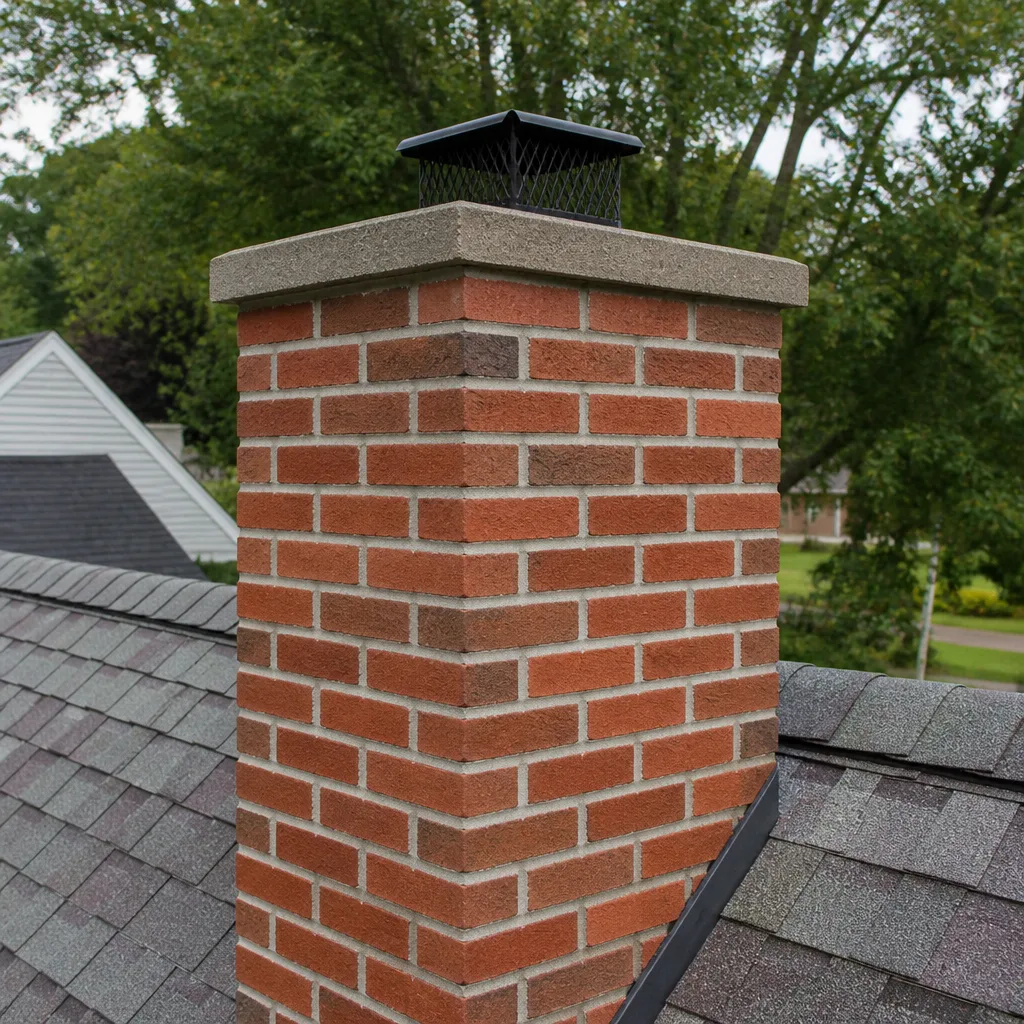 Masonry repair
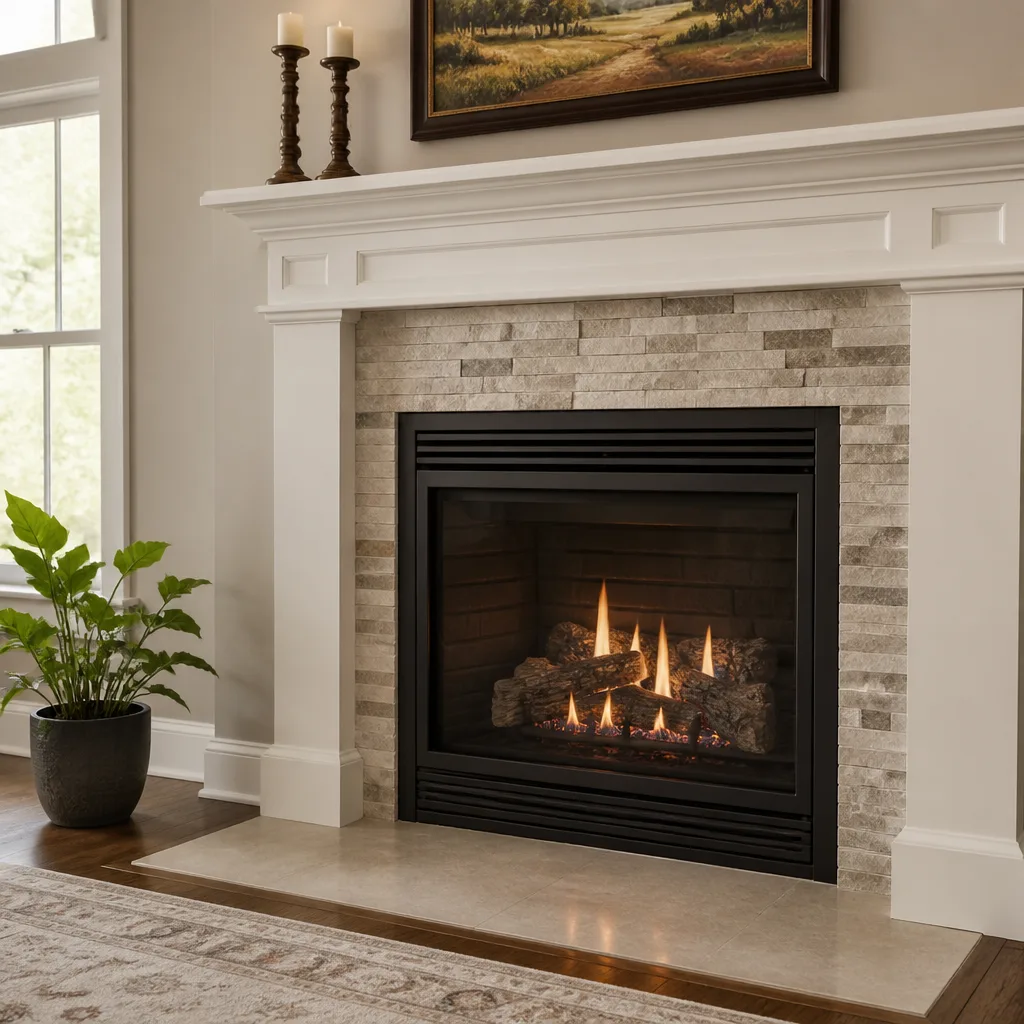 Gas fireplace service
Level 1 sweep and inspection to the NFPA 211 annual standard - flue, crown, cap, and flashing checked and photographed
Chimney sweep logs do not sweep chimneys. They loosen some creosote - which then falls where a brush and vacuum still have to collect it.
Chimney Cleaning Warning Signs: A Tulsa Homeowner’s Reference Guide
A white stain running down the outside of a chimney looks like a cosmetic issue. It’s actually called efflorescence, and it means water is already moving through the masonry – the stain is just where the damage became visible. That pattern holds for most of the chimney problems we see in Tulsa: by the time something looks dramatic, the underlying cause has been at work for a while. The subtle signs, the ones visible from your living room or your driveway, tell the story much earlier. This guide walks through what to look for inside the firebox, on the masonry, and around the flue, and helps you sort the warnings that can wait from the ones that can’t. You’ll finish knowing how to read your own chimney and how to document what you find.
Quick Answer
The main chimney cleaning warning signs are a smoky smell that returns even when the fireplace is cold, smoke rolling into the room instead of up the flue, a faint draft that pulls air down rather than out, white staining or crumbling mortar on the exterior, and dark or flaky buildup inside the firebox and flue. Some of these mean “schedule a sweep and inspection soon.” Others – like heavy creosote, cracked flue tiles, or smoke backing into the house – mean stop using the fireplace until a professional has looked at it. A camera inspection and photo report is what separates a real problem from a guess.
Styles & brands we work with
- Sweep & inspection
- Caps & crowns
- Flue relining
- Masonry repair
- Gas fireplace service
Table of Contents
- Interior Warning Signs: Draft, Smoke Rollout, and Odors
- Exterior Masonry Signs: Spalling vs. Surface Weathering
- What the Firebox Tells You: Reading Discoloration
- Creosote Levels and What They Mean
- Monitor-and-Schedule vs. Do-Not-Use-Until-Repaired
- How to Photograph Warning Signs Before a Contractor Visit
- Tulsa’s Seasonal Rhythms and When to Book a Sweep
- How a Professional Chimney Inspection Actually Works
Interior Warning Signs: Draft, Smoke Rollout, and Odors
Most chimney problems announce themselves indoors first. A fireplace that worked fine last winter starts puffing smoke, or the room smells like a campfire three days after the fire went out. Those two complaints cover a large share of what homeowners call us about in Tulsa, and they point at different causes.
Smoke rollout – smoke spilling into the room instead of rising up the flue – is usually a pressure or draft problem. The chimney wants to pull air up and out, but something is fighting it. Common culprits include a flue that’s partially blocked by soot or a bird nest, a damper that isn’t fully open, a firebox that’s too shallow for the fire being built, or a house that’s running exhaust fans and tight windows hard enough to pull air down the flue. A cold chimney can also do it on the first fire of the season, which is why the smoke clears once the flue warms up. When smoke rolls out consistently, not just on that first fire, it’s worth an inspection.
Odors are more subtle. A cold fireplace should smell like a cold fireplace: faintly smoky at most, and not unpleasant. A strong smell when the unit is off usually means creosote or soot has soaked into the firebox or flue lining, and humid air is pulling it out. Tulsa’s summer humidity makes this worse, which is why the smell often shows up in July rather than January.
Draft problems are the hardest to name but the easiest to feel. Put a hand near the open firebox on a mild day: you should feel air moving gently up and out. If you feel nothing, or a slight pull downward, the flue is likely obstructed or the house pressure is off.
- Smell test: a persistent smoky odor with no fire burning is a sign of buildup.
- Smoke test: smoke spilling into the room on a normal fire means draft trouble.
- Draft test: a cold hand near the firebox should feel upward air movement.
When your draft, smoke, or odor symptoms point at buildup, the fix is often a straightforward chimney sweep to clear the flue. When they point at a cracked liner or failing damper, it’s a repair.
Exterior Masonry Signs: Spalling vs. Surface Weathering
Walk outside and look at your chimney from the ground. Tulsa’s climate swings hard between wet springs, hot summers, and hard winter freezes. That cycle is tough on brick. The question isn’t whether the masonry will show wear; it’s whether the wear is superficial or structural.
Surface weathering is normal. Brick faces may chalk slightly, mortar joints look a bit dusty, and the color softens over time. None of it means failure. This is the “check it again in a year” category.
Spalling is different. A spalled brick has a face that’s flaked, popped, or fallen off, leaving a rough, crumbly interior exposed. The brick isn’t just discolored; it’s losing material. Once the face is gone, the brick absorbs water faster and fails faster. That’s the point where a repair, not a cleaning, is what the chimney needs.
Efflorescence – the white staining from the opening of this guide – is a water-transport sign. Water is moving through the masonry and leaving mineral deposits as it evaporates. It’s not automatically a crisis, but it’s the first visible clue that the brick is wet inside. Combine efflorescence with spalling, and you’ve got a chimney asking for attention. Add a crumbling crown or flashing that’s pulling away, and it’s asking loudly.
Mortar joints deserve their own look. Recessed or crumbling joints let water into the wall of the chimney, and in Tulsa, that water freezes and expands during a hard cold snap. That’s how a small mortar defect becomes a $400 problem instead of a $4,000 one – though the exact number is set by your written estimate. If you see joint wear, ask for a repair quote rather than just a sweep.
Exterior work is where we use Gelco and Famco caps and components. A well-fitted cap does more for a Tulsa chimney than almost any other single piece of hardware, because it keeps rain, snow, and wildlife out of the flue year-round.
What the Firebox Tells You: Reading Discoloration
Open the firebox door, look inside with a flashlight, and pay attention to color. Fireboxes tell you what’s happening in a way that no other part of the chimney can. The patterns are specific, and they point to different problems.
- Uniform dark gray soot on the firebox walls: normal. This is just burn residue, and it’s what a sweep removes.
- Black, glossy, or tar-like coating on the firebox or damper: that’s a heavier creosote deposit, and it’s the kind that burns hot. Glazed creosote needs chemical treatment or professional removal before the firebox is used again.
- White or light-colored streaks radiating from the damper or throat: often a sign of water infiltration or a fire that’s run hotter than the firebox is rated for. Worth an inspection.
- Rust-colored staining on the firebox floor: usually condensed moisture, which can indicate a cap failure or a flue that’s taking on water from above.
- Cracked firebrick or crumbling mortar inside the firebox: a structural issue. Firebrick protects the steel or masonry behind it; once it crumbles, the firebox loses its heat shield.
- Spalling on the firebox back wall: the masonry is breaking down. That’s a repair, not a sweep.
Discoloration that stops at a clear line across the firebox throat is usually just the level of the hottest fire it’s seen. Discoloration that travels up the face of the firebox surround or onto the hearth – that’s an escape path, and it means heat or smoke is getting somewhere it shouldn’t.
When firebox damage is significant enough to affect the flue, a repair might involve resurfacing rather than a full reline. HeatShield is a professional-grade restoration system that extends liner life in the right situations – it isn’t a hardware-store product.
Creosote Levels and What They Mean
Creosote is the residue left by wood smoke, and it’s the reason chimney fires happen. It forms in three general grades, and the grade matters more than the amount when deciding what to do.
- Stage 1 – soot and light flaky deposits. This is what a routine sweep handles. Most Tulsa homes that burn a cord or two of wood a season land here after a year of use.
- Stage 2 – hardened, crusty deposits, sometimes with a glazed surface. This is when the sweep takes longer and the technician needs to be more careful. It’s also the point at which annual sweeping becomes non-negotiable.
- Stage 3 – glazed, tar-like creosote that’s baked onto the flue wall. This is the most combustible grade. It’s harder to remove, and it’s the grade that’s most strongly associated with chimney fires because it off-gasses and ignites easily.
The reason a camera inspection matters is that you can’t see inside the flue from the firebox. A chimney can look clean with a flashlight while hiding heavy buildup at the smoke chamber or above the damper. That’s where the photo report comes in: you get to see exactly where the buildup is, in your own chimney, before anyone recommends anything.
If you’ve never had the flue looked at and you burn regularly, a sweep is the place to start. And if you’ve had a chimney fire – even a small one you heard but didn’t see – stop using the fireplace until it’s inspected. Chimney fires can damage the flue lining without the fire ever escaping the chimney.
Monitor-and-Schedule vs. Do-Not-Use-Until-Repaired
Not every warning sign means stop. Sorting them is the most useful part of this guide. Here’s how we’d group them for a Tulsa homeowner.
Monitor and schedule:
- Light soot on the firebox walls (normal, annual sweep timing).
- Minor surface weathering on exterior brick.
- Efflorescence alone, no spalling or mortar crumbling.
- A single smoke rollout when starting a cold fire.
- A faint smoky smell in humid weather.
These are all worth a call and a sweep or inspection on your calendar, but not a panicked decision.
Do not use until a professional has looked at it:
- Glazed creosote visible on the damper or firebox throat.
- Smoke rolling into the room consistently, not just on cold starts.
- Cracked or missing firebrick inside the firebox.
- Spalling brick, crumbling mortar, or flashing pulled away from the chimney.
- Any sign of a past chimney fire (cracked flue tile, warped damper, puffy creosote that looks like honeycomb).
- A strong, persistent smoky smell that doesn’t clear with the fire out and the damper open.
- Cold air pouring down the flue with the fireplace sealed.
The reason “do not use” is a hard line is straightforward: creosote compounds, flue tile can crack, and the firebox needs its brick intact to keep heat where it belongs. Once any of those fail, the chimney stops doing the job it was built for. If any structural damage is found, a proper repair with materials matched to the flue – DuraFlex and Olympia Chimney liner systems are what we specify for relining, because they’re what the trade uses – is the safe path forward.
How to Photograph Warning Signs Before a Contractor Visit
Good photos do two things: they help you get an accurate estimate, and they protect you from being sold work you don’t need. Here’s how to document what you’re seeing before anyone comes out.
- Photograph the exterior from the ground. Stand back so the whole chimney is in the frame, then take a closer shot of any staining, spalling, or mortar crumbling. Spring and summer light shows the brick face best.
- Get a flashlight shot of the firebox. Open the damper fully and light the interior from the side, not straight on. Discoloration patterns read better in side light than in flat front light.
- Photograph the damper itself. Open and closed. If the damper is warped or doesn’t seat, take a photo of the gap from underneath.
- Note the smell. You can’t photograph a smell, but you can write down when it’s strongest – mornings, humid days, after rain. That context helps narrow the cause.
- Record the smoke behavior. If smoke rolls out of the firebox, a short video from across the room shows exactly how much and how fast. That’s a stronger clue for a technician than a description.
- Check the cap and flashing with binoculars. A missing or rusted cap is common in Tulsa after spring storms. If you can see the top of the flue from the ground, photograph it.
Keep the photos together with the dates you took them. When you call, ask what the inspection includes and whether you’ll receive a photo report of the flue. Our inspections come with a camera inspection and photo report, so you can see what we see before anyone recommends a repair.
Tulsa’s Seasonal Rhythms and When to Book a Sweep
Chimney problems follow the calendar in Tulsa, and knowing the rhythms helps you schedule work like a local. Summer humidity is heavy here, which is why so many homeowners notice smoky smells in July and August when the fireplace has been silent for months. Fall and winter bring the first fires of the year, along with the smoke rollout that comes from a cold flue. Spring storms test the cap and flashing. If you have to pick one season to book, late summer is the easy answer, because you’re settling the winter’s-worth of residue before you start using the fireplace again.
Wood choice matters too. Burning soft, unseasoned wood – even when it’s locally cut – deposits more creosote than burning dry, seasoned hardwood. Tulsa has plenty of both, and the difference shows up in the flue within a season. If you’re not sure how dry your wood is, knocking two pieces together should give a hollow crack, not a dull thunk. Buy next winter’s wood now and stack it covered, off the ground, and open on the sides.
Burning practices deserve a mention. Fires that smolder most of the evening produce more creosote than hot, clean fires. Small, hot fires burn cleaner than a big, slow-burning one built to last overnight. A damper left partly closed through the burn reduces draft and adds deposit. None of this is cause for a lecture; it’s just useful in understanding why the flue builds up faster some years than others.
If you’re new to the house and don’t know when the chimney was last swept, the answer is “assume it hasn’t been.” A sweep and inspection gives you a starting point you can trust. If you’re in the middle of a home purchase or insurance review, an inspection is often what the seller or lender wants to see on paper. Our Tulsa team handles sweep, repair, and inspection together, so you’re not coordinating three contractors for one chimney.
How a Professional Chimney Inspection Actually Works
You should know what you’re paying for on inspection day. Here’s how the visit usually goes.
- Exterior walk-through. We look at the crown, cap, flashing, and brick from the ground and roof level, noting any staining, spalling, or joint damage and photographing what we see.
- Interior visual. Inside the firebox, the damper, the smoke chamber, and the throat. Soot, creosote grade, and any signs of past fire damage are noted.
- Camera inspection of the flue. A camera on a rod runs the length of the flue, capturing tile condition, joints, and any offset or gap. This is where most of the real findings come from.
- Photo report. We put the findings in a report with photos, so you can see anything being recommended. Nothing is called out that isn’t visible in the report.
- Written estimate, only if work is needed. The estimate is free, and the price is set per job by the written estimate. If nothing needs doing, we say so.
If a repair is warranted, the materials make the difference. Chimney repair on a Tulsa home often means resurfacing the flue with HeatShield, relining with DuraFlex or Olympia Chimney systems, or installing a new cap and flashing with Gelco and Famco components. Those choices matter because they’re specified to the flue you actually have, not to whatever happens to be cheapest to stock. General handyman work can’t touch those products; chimney repair belongs to a specialist.
Given that fireplace use peaks in winter, it’s worth knowing that a sweep is a seasonal task, not an hourly one. The point is to get the chimney sorted before you need heat, not to wait for the first cold night and then panic.
Common Mistakes to Avoid
- Treating white staining as a cosmetic issue. Efflorescence means water is moving through the masonry. Ignoring it lets the water do more damage every freeze. Photograph it and get it looked at.
- Burning the fire hotter to “clean” the flue. A hot fire can ignite glazed creosote. It doesn’t clean the chimney; it can start a chimney fire. Sweep the flue, don’t try to burn it clean.
- Skipping the camera inspection because the firebox looks fine. The most common serious finding in a Tulsa inspection is a flue defect that’s invisible from the firebox. The camera is what catches it.
- Hiring a general handyman for liner work. Liner installation requires matching the liner system to the flue, and that’s outside the scope of general repair. Chimney-specific work belongs to a chimney specialist.
- Ignoring a smoky smell in summer. That odor is creosote off-gassing in humid air, and it’s your chimney telling you it needs a sweep before fall.
- Assuming a missing cap is a minor thing. A cap keeps out rain, snow, squirrels, and birds. In Tulsa, spring storms and fall leaf drop make a missing cap a bigger problem than it looks.
- Waiting for the first snow to book. Sweep and inspection appointments fill quickly before winter. Late summer and early fall are easier to schedule and give you time to fix anything found.
See the difference
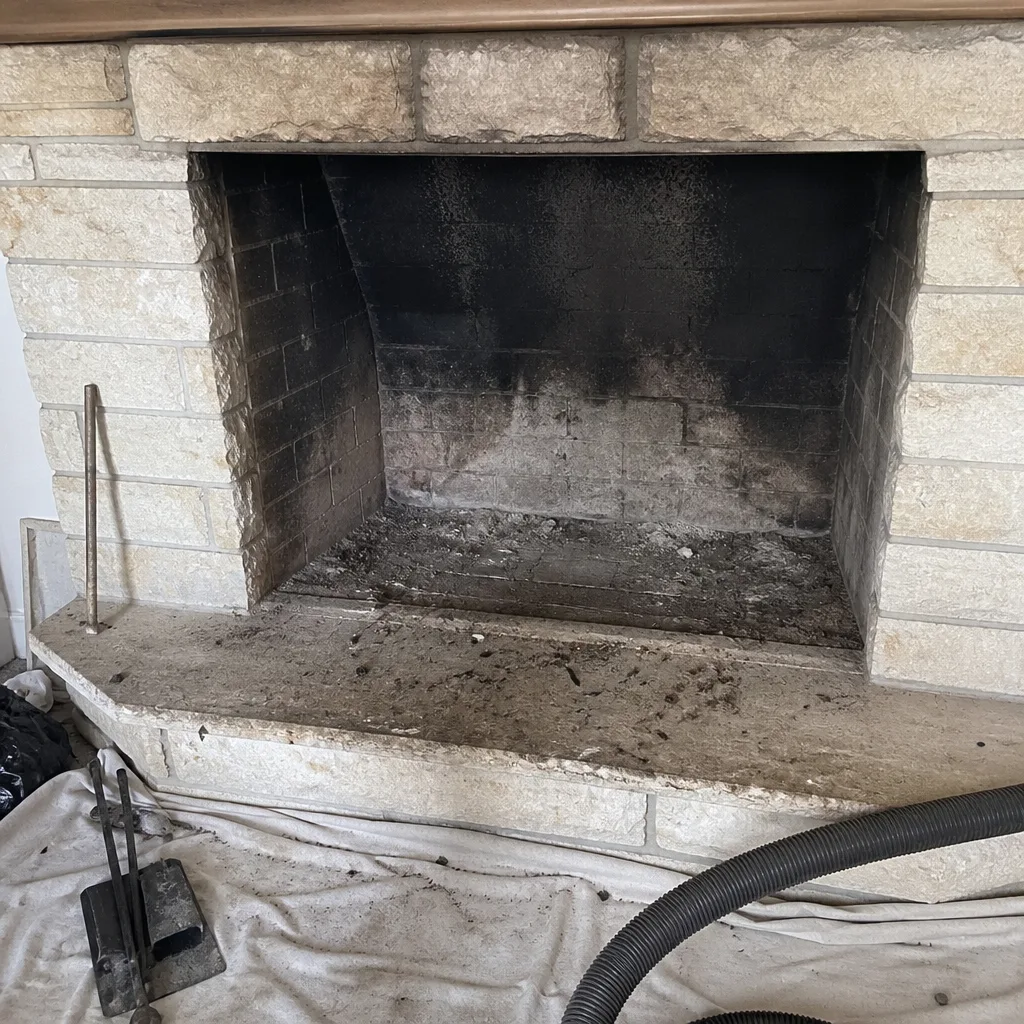 Before
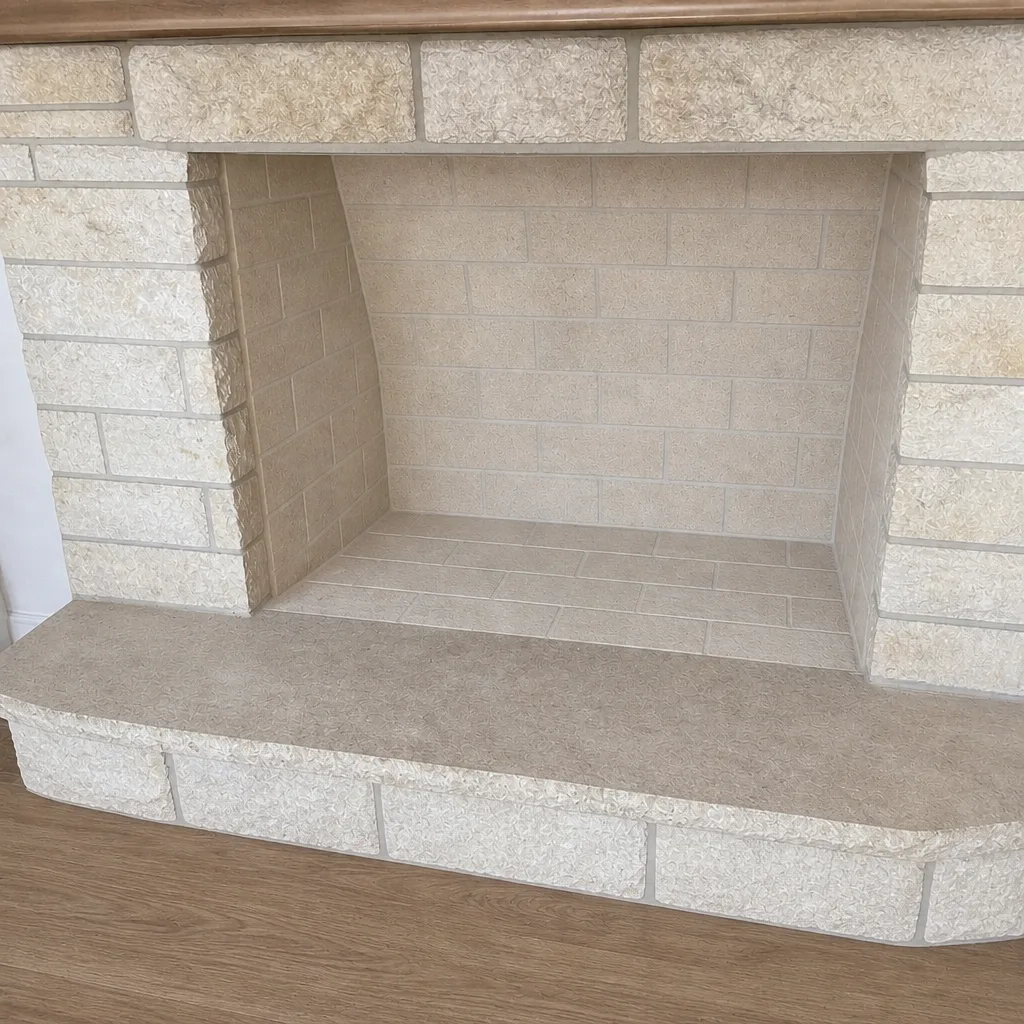 After
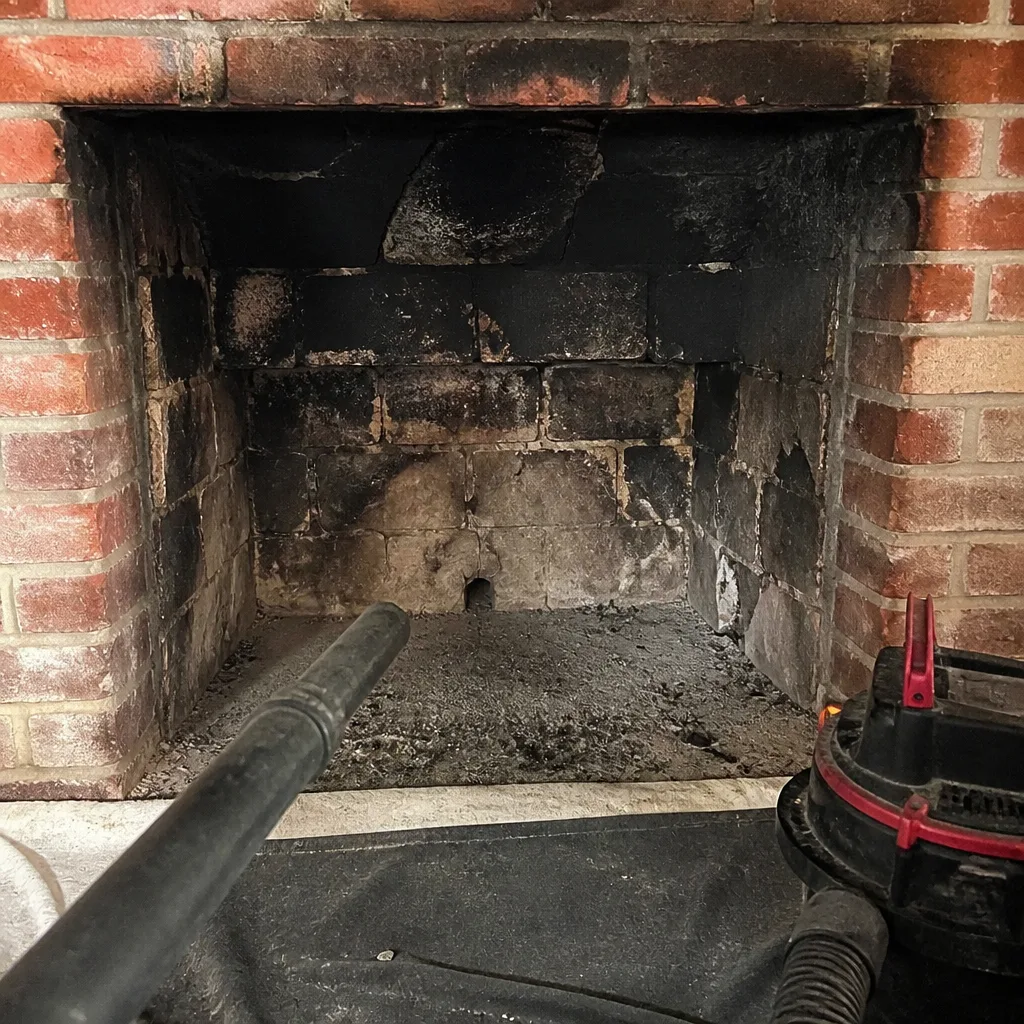 Before
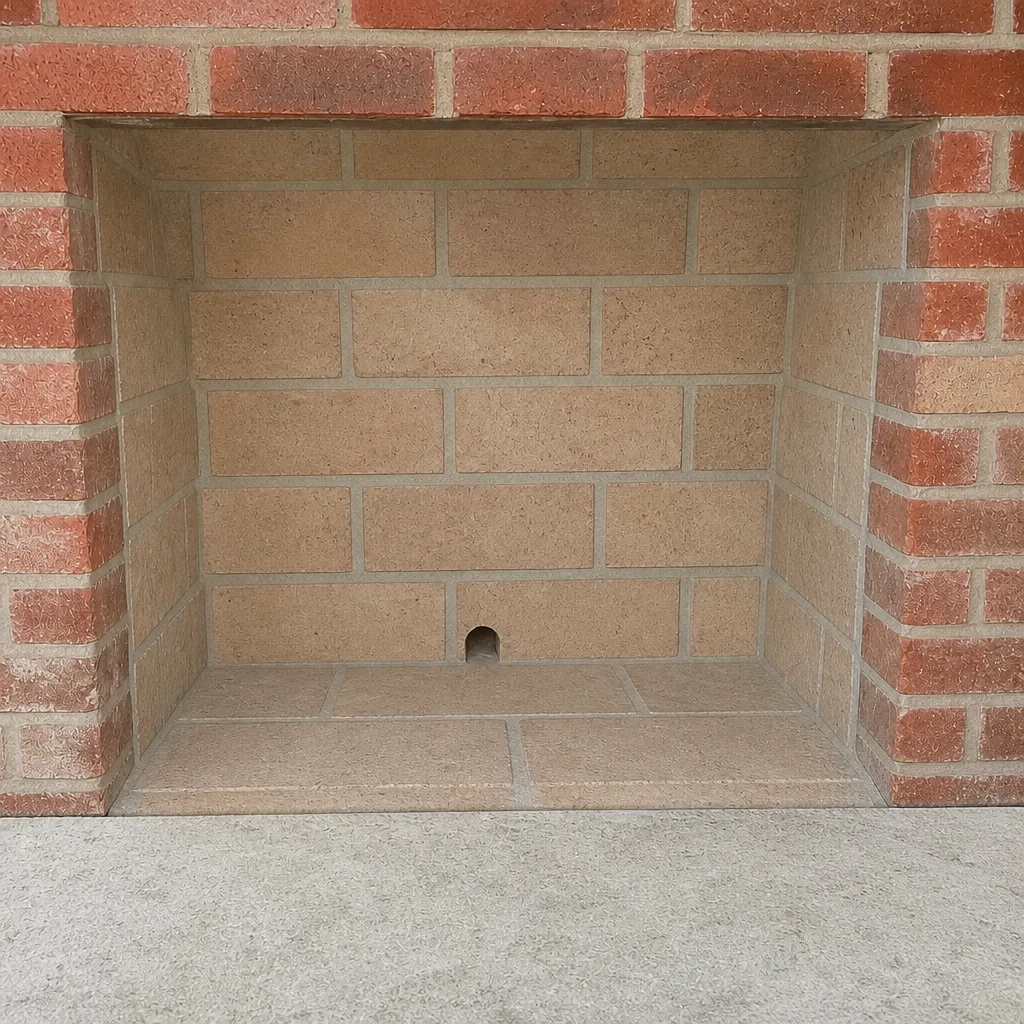 After
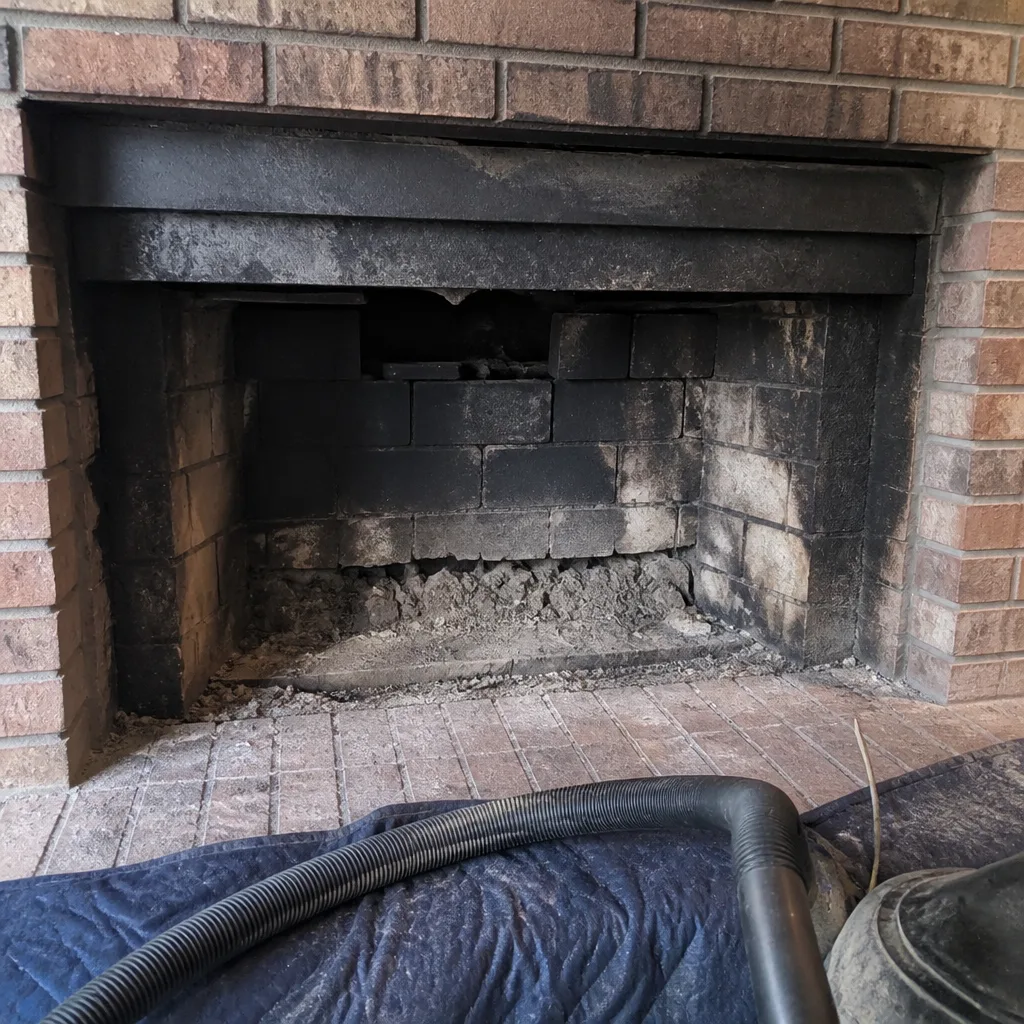 Before
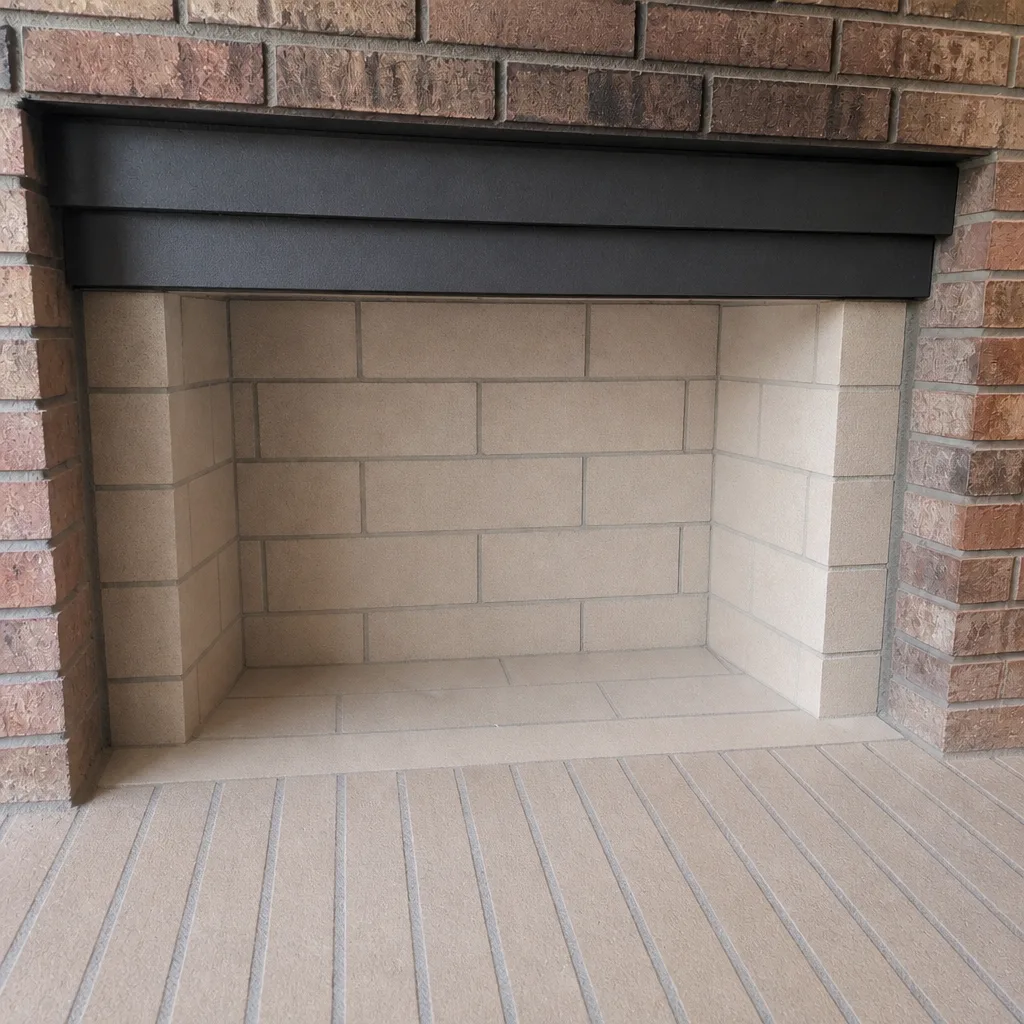 After
When to Call a Professional
Call us when smoke rolls into the room and stays there, when the fireplace smells smoky with nothing burning, when brick or mortar on the chimney shows spalling or crumbling, or when you honestly can’t remember the last time the chimney was swept. Call us after any chimney fire, however small, and after a spring storm that leaves the cap or flashing looking off. If you’re seeing glazed, tar-like creosote or cracked firebrick, stop using the fireplace and call before the next fire. Our technicians have up to 10 years of experience, and our work is backed by a satisfaction guarantee. Tulsa Chimney Cleaning offers free estimates in Tulsa – call (833) 712-5506. We answer 24/7. Fast dispatch from 7am to 7pm, Sunday through Friday.
Frequently Asked Questions
The most common chimney warning signs in Tulsa are a smoky smell that lingers when no fire is burning, smoke rolling into the room on a normal fire, white staining or spalling on exterior brick, and dark or flaky buildup inside the firebox. Any single one is worth a call, and two or more together point at a flue that needs a real inspection. Call (833) 712-5506 for an exact quote – estimates are free.
A chimney should be swept when the creosote buildup reaches about an eighth of an inch, which for most Tulsa homes that burn regularly works out to once a year. Homes that burn occasionally might go longer between sweeps, but shouldn’t skip the inspection. If you’re not sure of the buildup, a camera inspection settles it. Call (833) 712-5506 for an exact quote – estimates are free.
A white stain on a chimney is called efflorescence, and it means water is moving through the masonry. On its own, it’s a “monitor and schedule” sign, not an emergency. Combined with spalling brick, crumbling mortar, or a damaged crown, it means the chimney needs repair before the next freeze-thaw cycle. Call (833) 712-5506 for an exact quote – estimates are free.
No. Glazed creosote is the most combustible buildup grade, and using the fireplace with it present raises the risk of a chimney fire. Stop using the fireplace and get it swept and inspected before the next fire. Call (833) 712-5506 for an exact quote – estimates are free.
Skipping a sweep lets creosote continue to build in the flue, and the more it builds, the hotter and longer any chimney fire will burn. It also lets small flue cracks go unnoticed until they’ve widened or let water in. The cost of a sweep is small compared with the cost of a reline, and noticing signs early keeps the cheaper option on the table. Call (833) 712-5506 for an exact quote – estimates are free.
You need a new liner when the existing one is cracked, missing sections, or compromised by a past chimney fire, and only a camera inspection can confirm that. Many chimneys that look like reline candidates turn out to be good candidates for HeatShield resurfacing, which restores liner life without full replacement. We won’t recommend either without photo evidence you can see. Call (833) 712-5506 for an exact quote – estimates are free.
The Bottom Line
Most of the chimney problems we see in Tulsa give warning well before anything dramatic happens. The advice in this guide comes down to four moves: check the firebox and the exterior masonry on a regular schedule, sort what you find into monitor-and-schedule versus do-not-use categories, photograph what you’re seeing before you get quotes, and let a camera inspection settle any question you can’t answer from the ground. A sweep and an inspection each year keep the fireplace in the “working fire-safety system” territory where it belongs. When something does need fixing, the materials matter: professional-grade liners and components, specified to your flue, installed by a chimney specialist. From sweep to repair to inspect, we do all three, and you’ll see exactly what needs doing before anyone recommends a thing.
If you’re seeing any of the signs in this guide – white staining, spalling brick, smoke rollout, a smoky smell in July, or a flue you’ve never had looked at – call Tulsa Chimney Cleaning at (833) 712-5506 for a free estimate. We answer 24/7. Fast dispatch from 7am to 7pm, Sunday through Friday. A sweep and inspection now is a small, easy job; a chimney fire or water-damaged masonry is not.
Written by the team at Tulsa Chimney Cleaning.